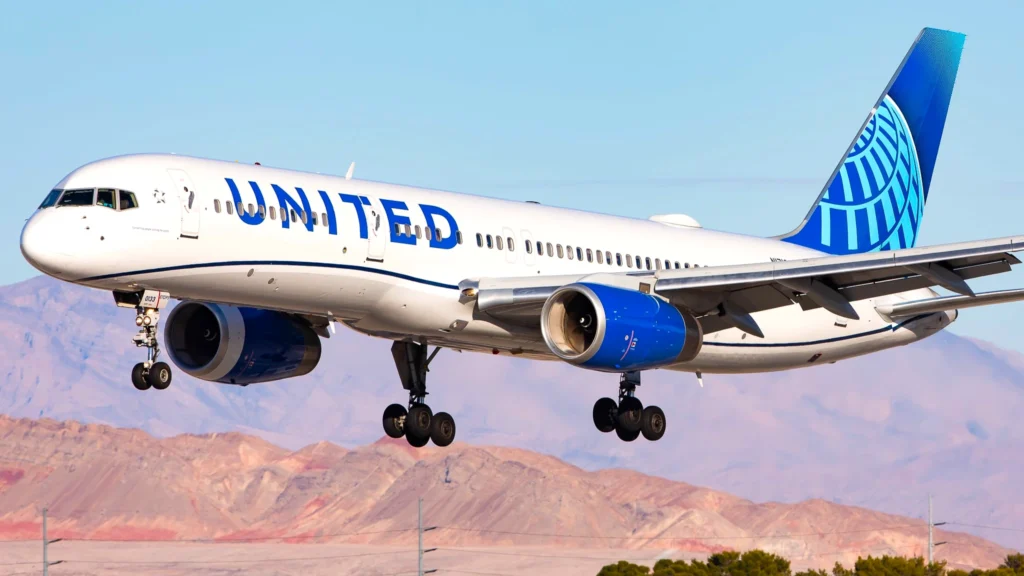
United Airlines CEO Scott Kirby has launched a rare public broadside against American Airlines, accusing the Fort Worth-based carrier of refusing to engage in merger discussions that United claims could have reshaped the U.S. aviation landscape. The remarks, delivered during a high-profile industry conference, mark a significant escalation in long-simmering tensions between two of America’s largest airlines.
Kirby didn’t mince words: “American Airlines had the opportunity to sit down and talk about a combination that could have delivered massive benefits for employees, customers, and shareholders. They chose not to show up.” The statement confirms months of speculation about behind-the-scenes maneuvering and highlights a growing divide over the future of airline consolidation.
This isn’t just corporate posturing. The rebuff exposes deeper strategic divides in how legacy carriers view competition, market share, and long-term sustainability in an industry still recovering from pandemic shocks and grappling with pilot shortages, infrastructure strain, and rising consumer expectations.
Why United Wanted a Merger
United’s push for a merger with American wasn’t impulsive. It followed a pattern of strategic moves across the airline sector—Alaska absorbing Virgin America, JetBlue’s attempted takeover of Spirit (later blocked), and Delta’s long-term dominance through operational excellence and selective expansion.
For United, a merger with American would have created a behemoth: - Combined fleet of over 1,800 aircraft - Daily departures exceeding 10,000 flights - Presence at every major U.S. hub and many secondary markets - Global network stretching into every continent
But scale wasn’t the only motivator. United leadership cites operational synergies, cost savings, and the ability to invest more aggressively in new aircraft, sustainable aviation fuel (SAF), and digital customer experience.
“Imagine if we could streamline routes, eliminate redundant overhead, and reinvest $2–3 billion annually into better service, pay, and innovation,” Kirby said. “That’s what a disciplined merger could deliver.”
Critics, however, warn that consolidation reduces competition and could lead to higher fares—especially on overlapping routes where American and United already dominate.
American Airlines’ Strategic Resistance
American Airlines’ refusal wasn’t a surprise to industry insiders. The airline has spent the past five years rebuilding after its 2011 bankruptcy and 2022 near-collapse due to operational meltdowns. Leadership under CEO Robert Isom has emphasized internal transformation over external expansion.
American’s official stance: “We believe the best path forward is executing our own plan—enhancing customer experience, improving reliability, and empowering our team members.” In other words, American wants to stand on its own.
But there’s more beneath the surface. Merging with United would inevitably mean ceding control. Despite similar sizes, United has outperformed American in key areas: - Higher operating margin (11.7% vs. 6.2% in latest reporting) - Better customer satisfaction scores (J.D. Power, 2023) - More modern fleet and aggressive transition to next-gen aircraft
A merger would likely result in United executives dominating leadership roles, with major operational decisions shifting to Chicago from Fort Worth. For a company with deep regional pride and a strong union presence, that’s a hard pill to swallow.
Additionally, American’s unions have historically resisted mergers that could threaten jobs or seniority structures. Even if leadership were open, labor opposition could derail talks.
The Real Impact on Consumers What does this mean for travelers?
On the surface, American’s refusal preserves competition—good news for flyers who benefit from route overlap and price competition. Cities like Dallas, Charlotte, Philadelphia, and Phoenix see both carriers operating extensive hubs, offering multiple daily flights to key destinations.
But long-term, the lack of consolidation might hurt service quality.
Without economies of scale, airlines struggle to justify investments in: - Premium cabins - Airport lounges - Seamless international connections - Customer service staffing
Smaller carriers, meanwhile, can’t fill the gap. Southwest avoids major hubs. Frontier and Spirit remain ultra-low-cost, with limited international reach. JetBlue, despite growth, still operates under 250 aircraft.
The reality: U.S. air travel is increasingly shaped by three giants—Delta, American, and United. If they refuse to consolidate, they must find other ways to compete. The danger is that competition devolves into fare wars that sacrifice profitability—and ultimately, service.
Regulatory and Antitrust Headwinds
Even if both airlines were interested, a merger would face steep regulatory scrutiny.
The Department of Justice (DOJ) has grown increasingly skeptical of airline consolidation. It blocked JetBlue’s $3.8 billion acquisition of Spirit Airlines in 2023, arguing the deal would reduce competition on 60+ routes. A United-American merger would trigger even greater concern.
Key antitrust issues: - Market dominance on transcontinental routes (e.g., LAX-JFK, SFO-DCA) - Control of major hubs like Dallas (DFW), Chicago (ORD), and Washington (DCA) - Potential reduction in low-fare options for leisure travelers
The DOJ would likely demand massive divestitures—possibly forcing the new entity to spin off one of the hubs or sell off dozens of routes to low-cost carriers. That weakens the merger’s value proposition.
Additionally, the Federal Aviation Administration and the Department of Transportation would scrutinize operational integration, safety protocols, and customer communication systems.
One likely condition: a “remedies package” requiring the merged airline to offer slots, gates, and takeoff/landing rights to competitors at discounted rates—similar to what Delta had to do after acquiring Northwest.
What United Might Do Next With the door closed at American, United has several alternatives:
1. Double Down on International Alliances United already leads among U.S. carriers in Star Alliance connections. It could deepen partnerships with Lufthansa, Air Canada, and ANA to offer seamless global travel—without the headache of merging domestic operations.
2. Acquire a Regional or Low-Cost Carrier Buying a regional player like SkyWest or a low-cost airline such as Frontier could allow United to expand reach without triggering antitrust alarms. It’s a model Alaska used effectively with Horizon Air.
3. Focus on Organic Growth Invest in premium products (e.g., Polaris business class), expand at underserved airports, and leverage digital tools to improve booking, boarding, and customer support.
4. Push for Policy Changes Lobby for government support in SAF development, ATC modernization, and infrastructure funding—areas where scale matters but don’t require ownership consolidation.
United’s leadership appears to favor a hybrid strategy: grow selectively, partner globally, and use technology to differentiate.
The Bigger Picture: Is U.S. Aviation Too Fragmented?
The United-American standoff reflects a broader industry crisis: the U.S. airline market may be stuck in a “middle ground” where it’s neither consolidated enough to invest aggressively nor competitive enough to drive down prices sustainably.
Delta’s success proves scale can work. With a unified operation, modern fleet, and strong loyalty program, it consistently delivers better margins and customer satisfaction.

American and United, meanwhile, spend billions on stock buybacks and debt reduction—not because they’re profitable, but because they’re trying to appear stable to investors.
A merger could have freed both airlines from this cycle. Instead, they remain locked in a high-cost, high-risk rivalry that benefits neither management nor travelers.
One telling data point: Despite combined revenues exceeding $80 billion annually, American and United spend less per passenger on innovation than Delta or JetBlue.
What This Means for Employees
Airline mergers are emotionally charged for employees. Seniority, pay, benefits, and job security hang in the balance.
United’s pitch likely included promises of “no involuntary layoffs” and “protection of work rules”—standard assurances in such talks. But history shows integration is painful.
After United merged with Continental in 2010: - It took seven years to fully integrate workgroups - Tens of thousands of staff faced disrupted seniority lists - Customer service suffered due to inconsistent training and systems
American’s leadership likely saw those scars and decided the risk wasn’t worth the reward.
Still, unions should pay attention. Without merger-driven job growth, career advancement may slow. And if neither airline gains a decisive competitive edge, long-term profitability—and pension security—remain vulnerable.
The Bottom Line: A Missed Opportunity?
Scott Kirby’s public criticism isn’t just about pride. It’s a signal that United sees a window closing—a chance to reposition against Delta and prepare for an era of tighter margins, climate regulation, and shifting traveler demands.
By refusing to talk, American Airlines may have protected its independence. But it also passed up a chance to co-author the next chapter of U.S. aviation.
The industry doesn’t need more point-to-point feuds. It needs bold thinking. Strategic alignment. Investment in people and planet.
Whether through merger, partnership, or policy, the next phase of airline growth won’t come from flying more 737s on the same routes. It will come from reimagining how air travel works—for everyone.
For now, travelers, employees, and investors are left watching two giants circle each other, each insisting they can go it alone. The question is: for how long?
What happens if United and American eventually reconsider? They’d face intense regulatory scrutiny. Any future talks would require a clear plan for preserving competition, likely involving route divestitures or third-party access to hubs.
Could United target another airline instead? Possibly. Frontier or Spirit could be candidates, though United’s focus on premium service makes a low-cost merger a cultural mismatch. A regional acquisition is more plausible.
Is American Airlines’ reliability improving? Yes. After a disastrous 2022, American has invested heavily in operational recovery. On-time performance improved from 67% to 81% in two years, but still lags behind United and Delta.
Why did United go public with the rejection? To pressure American, sway investor opinion, and position itself as forward-thinking. It’s a negotiation tactic and a branding move.
Will fares go up if airlines don’t merge? Not immediately. But without scale, airlines may struggle to offer value on long-haul or low-demand routes, leading to reduced choices over time.
Could pilot shortages influence merger decisions? Absolutely. A merged airline could better manage crew scheduling and training pipelines, easing pressure during peak travel periods.
Does customer service improve after airline mergers? Not initially. Integration typically causes short-term disruption. Long-term gains depend on execution, investment, and culture alignment.
FAQ
What should you look for in United Chief Slams American Airlines Over Merger Snub? Focus on relevance, practical value, and how well the solution matches real user intent.
Is United Chief Slams American Airlines Over Merger Snub suitable for beginners? That depends on the workflow, but a clear step-by-step approach usually makes it easier to start.
How do you compare options around United Chief Slams American Airlines Over Merger Snub? Compare features, trust signals, limitations, pricing, and ease of implementation.
What mistakes should you avoid? Avoid generic choices, weak validation, and decisions based only on marketing claims.
What is the next best step? Shortlist the most relevant options, validate them quickly, and refine from real-world results.