Safety doesn’t happen by accident — it’s built through consistent, intentional communication. Yet, many teams treat weekly toolbox talks as routine check-ins rather than critical risk-reduction opportunities. The result? Disengaged crews, overlooked hazards, and preventable incidents.
The right toolbox talk topic doesn’t just inform — it changes behavior. Whether you're managing a construction crew, maintenance team, or utility workers, choosing the right weekly topics is the difference between checking a box and creating a culture of awareness.
Let’s break down the most effective weekly toolbox talk topics, how to structure them for impact, and why some teams still miss the mark.
Why Most Toolbox Talks Fail
Toolbox talks often fall flat because they’re repetitive, generic, or disconnected from real risks. “Hard hat safety” every other week won’t cut it if electrical hazards are rising on-site.
Common flaws include:
- Overused topics without real-world context (e.g., “wear PPE” without explaining why it matters this week)
- No follow-up — once the talk ends, nothing changes
- One-size-fits-all delivery — new workers and veterans hear the same script
- Zero engagement — workers listen (or pretend to) but aren’t invited to share
A good toolbox talk connects to current conditions. If a crew is starting excavation, the talk should focus on trench safety — not generic fall protection.
Core Principles of High-Impact Toolbox Talks
To make your weekly safety discussions effective, stick to these principles:
1. Relevance > Routine Pick topics that reflect what’s actually happening on-site this week. Planning roof work? Talk about fall arrest systems, anchor points, and rescue plans — not just “be careful.”
2. Worker-Led Insights Let crews contribute. Ask: “What near-misses did you see last week?” or “What feels unsafe about this new task?” Their answers become next week’s talk.
3. Actionable Takeaways Every talk should end with a clear action: inspect harnesses before ascent, report damaged gloves immediately, or confirm lockout-tagout steps with a buddy.
4. Duration Matters Keep it under 15 minutes. Respect workers’ time. If it’s longer, attention drops — and so does retention.
5. Document and Track Sign-in sheets are table stakes. Better: note concerns raised, actions promised, and verify follow-up. This creates accountability.
Top 10 Weekly Toolbox Talk Topics That Work
These topics are proven across industries — construction, manufacturing, utilities, and maintenance. Rotate them based on project phase and risk level.
#### 1. Hazard Identification on the Job Site Workers often miss subtle hazards because they’re focused on tasks. A weekly talk should train eyes to spot emerging risks.
Example: During concrete pour prep, one worker noticed unmarked rebar protruding from a slab edge — a tripping and impalement risk. Because hazard ID was the week’s talk topic, he reported it immediately.
Use the “Scan, Spot, Stop” method: - Scan the area before starting work - Spot anything unusual — wet surfaces, temporary cables, missing guardrails - Stop and address it before proceeding
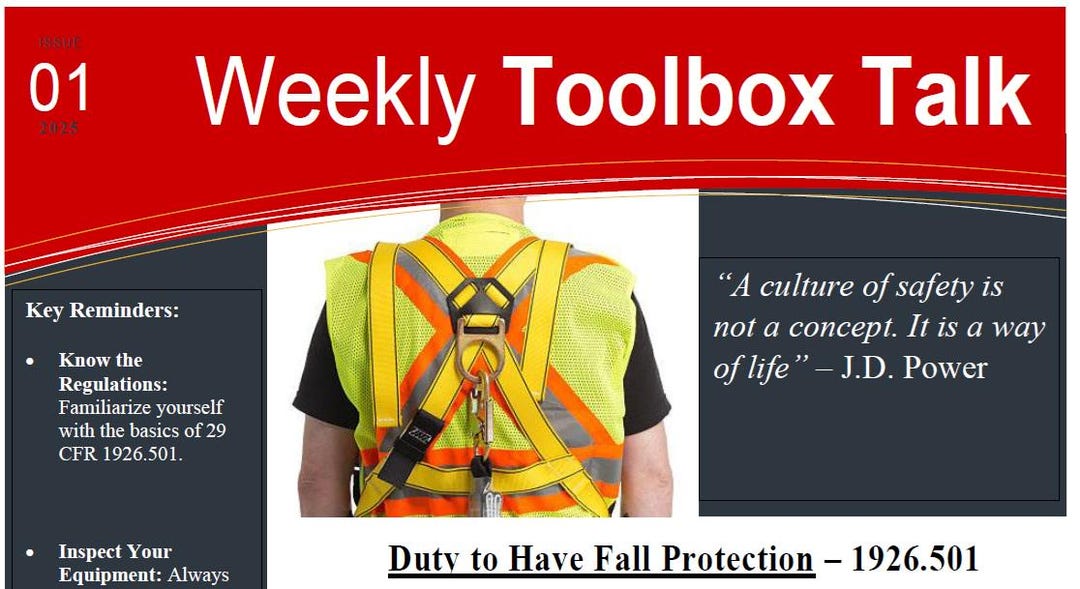
#### 2. Fall Protection Beyond the Basics Everyone knows to wear a harness. But do they know how to inspect it? Or that anchor points must support 5,000 lbs per worker?
Focus on: - Proper D-ring positioning - Lanyard shock absorber deployment - Rescue plans (how will you retrieve someone if they fall?)
Mistake to avoid: Assuming fall protection is “covered” because harnesses are issued. Without regular review, misuse becomes normal.
#### 3. Hand and Power Tool Safety Hand injuries are among the most common. A weekly focus keeps tool discipline sharp.
Talk points: - Inspect tools before use — frayed cords, cracked casings, guard misalignment - Using the right tool for the job (no using a screwdriver as a chisel) - Securing workpieces — never hold material by hand during cutting
Real case: A worker lost a fingertip using a handheld angle grinder without a guard. The tool had been “working fine” — until it wasn’t.
#### 4. Electrical Safety Near Overhead Lines A major risk in construction and utility work. One wrong move can be fatal.
Emphasize: - The 10-foot rule (minimum clearance from power lines) - Spotter roles when operating cranes or booms - De-energized vs. energized work — and proper PPE for each
Use visual aids: a photo of a crane too close to lines drives the point harder than a lecture.
#### 5. Heat Stress and Hydration Often overlooked until someone collapses. Seasonal doesn’t mean occasional — plan early.
Cover: - Early signs: headache, dizziness, cramps - Hydration rhythm (sip every 15–20 minutes, not chug at breaks) - Buddy system for monitoring
Pro tip: Schedule high-exertion tasks for cooler hours when possible. Adjust schedules — don’t just hand out water and move on.
#### 6. Ladder Safety: Setup, Use, and Inspection Ladders cause hundreds of injuries yearly. Most are preventable.
Focus on: - The 4:1 rule (one foot out for every four feet up) - Securing top and bottom - Carrying tools in a belt — never in hand
Common mistake: Standing on the top two rungs “just for a second.” It only takes one second to fall.
#### 7. Excavation and Trenching Hazards Cave-ins kill. Yet many crews treat trenches like ordinary ditches.
Talk about: - Soil classification (Type A, B, C) - Protective systems: shoring, shielding, sloping - Atmospheric testing in deep trenches
Use case: Before digging, conduct a joint site walk with foremen and laborers. Make the talk part of the pre-dig checklist.
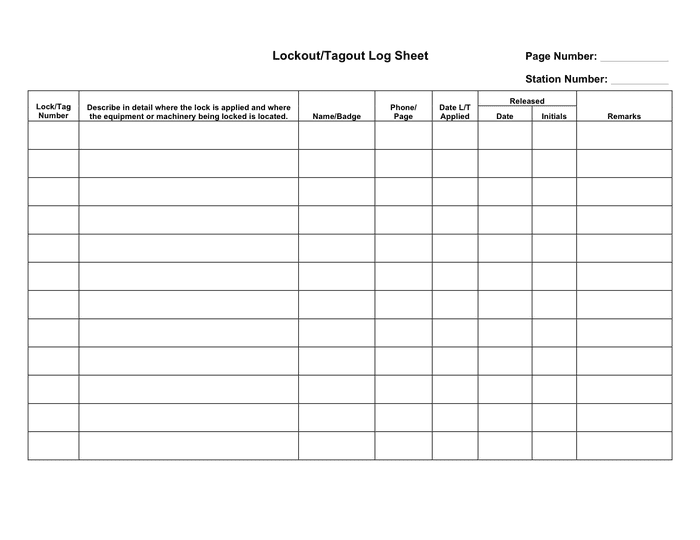
#### 8. Lockout/Tagout (LOTO) Procedures Critical during maintenance. Missteps lead to electrocution, crushing, or startup accidents.
Drill down on: - Who applies the lock? (Authorized vs. affected employees) - Testing for zero energy - Group lockout steps
Mistake: Assuming one lock is enough. Multiple energy sources? Multiple locks.
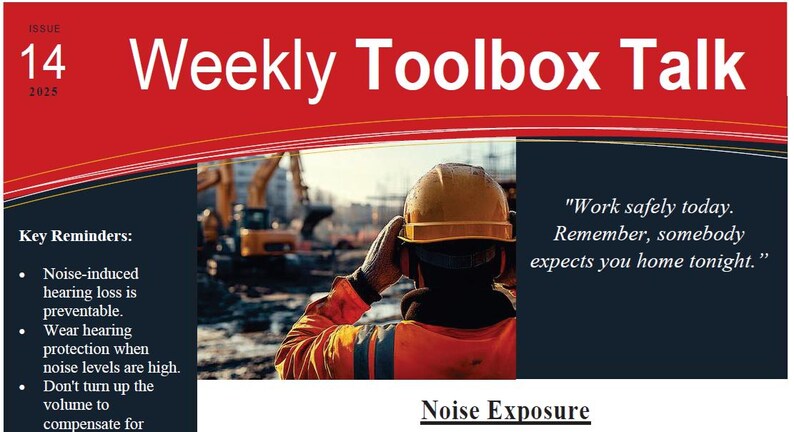
#### 9. Noise Exposure and Hearing Protection Long-term risks are invisible. Workers ignore ear protection until it’s too late.
Discuss: - When hearing protection is required (typically >85 dB) - Proper fit of earplugs and muffs - Signs of early hearing loss (ringing, muffled speech)
Tip: Bring a sound meter to the talk. Measure a nearby tool — seeing 95 dB hits harder than quoting a number.
#### 10. Mental Fatigue and Focus Safety isn’t just physical. Mental fatigue leads to lapses.
Talk about: - Signs of distraction: rushing, skipping steps, irritability - The impact of poor sleep or long shifts - Encouraging workers to speak up if they’re not 100%
Real insight: A worker admitted he was distracted due to family stress. The crew adjusted task assignments — preventing a potential error.
How to Rotate Topics Strategically
Don’t randomize. Use a risk-based calendar.
Start with: - Project phase (excavation, framing, mechanical, cleanup) - Weather conditions (heat, rain, wind) - Incident trends (if hand injuries rise, double down on tool safety) - New equipment or processes (introduce talks before rollout)
- Example rotation for a 4-week cycle:
- Fall Protection (week of roof work)
- LOTO (before HVAC startup)
- Heat Stress (first hot week)
- Hazard ID (general refresh)
Revisit high-risk topics quarterly — but with new examples.
Making Toolbox Talks Engaging
No one wants another lecture. Try these formats:
- Show and Tell: Bring a damaged harness, a frayed cable, or faulty tool. Ask: “Would you use this?”
- Scenario Drill: “You’re setting up scaffolding and see a cracked base plate. What now?”
- Near-Miss Story: Share (anonymized) real incidents. “Last month, a worker slipped on oil — here’s how we caught it.”
- Worker-Led Talk: Assign a crew member each week to lead. Builds ownership.
Avoid death-by-PowerPoint. Use photos, quick demos, or whiteboard sketches.
Pitfalls to Avoid
Even well-meaning teams make these mistakes:
- Talking at workers, not with them — silence isn’t agreement, it’s disengagement
- Ignoring the “why” — explain how this protects them, their team, their family
- Skipping documentation — no record, no accountability
- One topic for all crews — electricians don’t need the same talk as landscapers
Adapt. A talk for night shift might focus on lighting and visibility. Day shift? Maybe heat or crane coordination.
Closing: Make Safety a Conversation, Not a Lecture
Toolbox talks aren’t about compliance — they’re about connection. The best topics don’t just list rules; they spark discussion, reveal hidden risks, and empower workers to act.
Pick your next topic not because it’s due, but because it matters now. Tie it to the work, invite real talk, and follow up. That’s how you turn weekly meetings into lasting safety change.
Start next week with a question: “What’s the one thing that’s been bothering you safety-wise?” Let that drive your talk. You’ll get more honesty — and better results — than any scripted agenda.
FAQ
What should be included in a weekly toolbox talk? A clear topic, real-world relevance, hazard explanation, safe work practices, and a chance for workers to respond or ask questions. Include sign-in, topic, date, and any actions.
How long should a toolbox talk last? Ideally 10–15 minutes. Long enough to cover key points, short enough to hold attention.
Who should lead toolbox talks? Supervisors, foremen, or safety officers — but rotate when possible. Worker-led talks increase engagement.
Can toolbox talks prevent incidents? Yes — when they’re timely, specific, and tied to behavior. Studies show consistent talks reduce recordable incidents by up to 30%.
How often should topics repeat? High-risk topics (falls, LOTO, electrical) should return quarterly. Others can rotate based on project needs.
Should toolbox talks be documented? Absolutely. Records prove compliance and help track recurring issues. Include attendance, topic, and key takeaways.
What if workers don’t participate? Shift from lecture to dialogue. Ask open questions, share real near-misses, and acknowledge input. Engagement grows with trust.
FAQ
What should you look for in Weekly Toolbox Talk Topics That Keep Teams Safe and Focused? Focus on relevance, practical value, and how well the solution matches real user intent.
Is Weekly Toolbox Talk Topics That Keep Teams Safe and Focused suitable for beginners? That depends on the workflow, but a clear step-by-step approach usually makes it easier to start.
How do you compare options around Weekly Toolbox Talk Topics That Keep Teams Safe and Focused? Compare features, trust signals, limitations, pricing, and ease of implementation.
What mistakes should you avoid? Avoid generic choices, weak validation, and decisions based only on marketing claims.
What is the next best step? Shortlist the most relevant options, validate them quickly, and refine from real-world results.