A worker climbs a ladder with loose footing. No one’s checked the equipment. No one’s reminded the crew about fall protection. It only takes one oversight to turn routine work into a crisis. That’s where the toolbox talk steps in—not as a formality, but as a frontline defense.
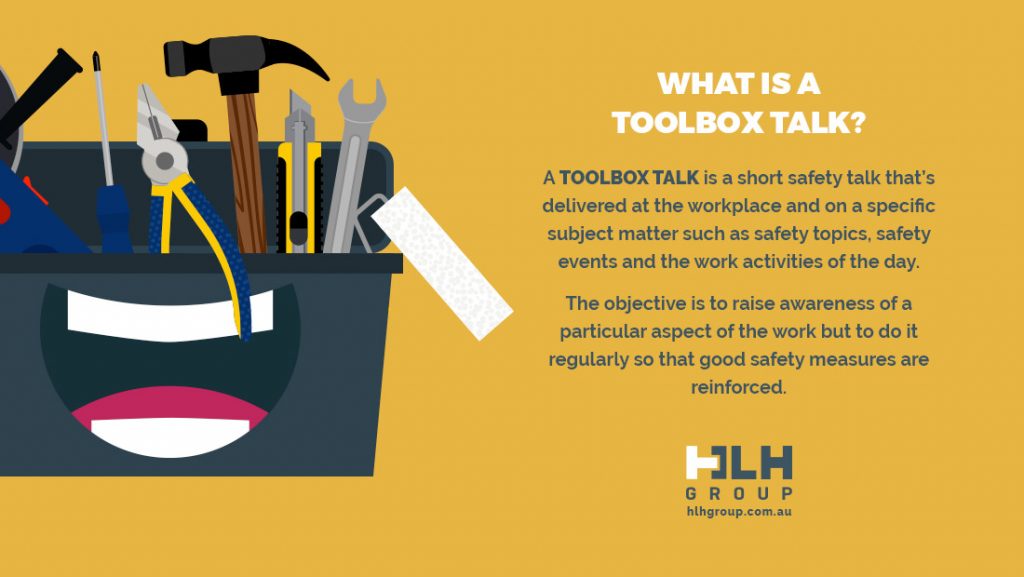
At its core, a toolbag talk (also commonly called a “tailgate meeting”) is a short, focused safety discussion held before work begins. It’s not a corporate seminar or a compliance checkbox. It’s a real-time conversation about real risks—conducted by supervisors, attended by workers, and rooted in the day’s actual tasks.
These talks prevent accidents. They clarify hazards. And when done right, they build a culture where safety isn’t enforced—it’s expected.
Let’s break down what a toolbox talk really is, how it works, and why so many organizations get it wrong.
The Anatomy of an Effective Toolbox Talk
A toolbox talk isn’t just a gathering. It’s a structured moment of awareness. Think of it as a safety pit stop—brief, targeted, and essential.
What Makes It Different From a Regular Meeting?
Unlike general safety trainings that happen quarterly or annually, a toolbox talk is:
- Short: 5 to 15 minutes long
- Timely: Held just before work starts
- Specific: Focused on immediate tasks and current hazards
- Interactive: Encourages questions and team input
- Action-oriented: Ends with clear safety expectations
It’s not about reading from a script or ticking a box. It’s about engagement. For example, instead of saying, “Wear your PPE,” a strong talk asks, “Who can tell me which PPE we need for this overhead welding task—and why?”
Who Leads It?
Typically, the supervisor, foreman, or site manager leads the talk. But the best ones flip the script—inviting crew members to share observations. A seasoned electrician might point out that the weather could affect outdoor wiring work. A new hire might admit they’re unsure how to inspect a harness. That dialogue is gold.
Why Toolbox Talks Work: The Psychology of Safety Awareness
Safety protocols fail not because people don’t care—but because they forget, rush, or assume someone else is watching.
A toolbox talk fights complacency.
Neuroscience shows that brief, repeated messaging strengthens memory and behavior. When a team hears, discusses, and applies a safety point daily, it moves from abstract rule to automatic habit.
Consider this scenario: A construction crew is installing rebar on the third floor. The talk covers edge protection. The lead asks, “Where are the unprotected edges today?” Workers point to two locations. The team agrees: flag them, set up temporary rails, and double-check harnesses. That 10-minute talk just reduced fall risk significantly.
This isn’t just procedure—it’s situational awareness in action.

Common Mistakes That Undermine Toolbox Talks
Even organizations that schedule daily talks often miss the mark. Here’s where they go wrong:
1. Repetition Without Relevance
Using the same generic topics week after week—like “slips and falls”—without tying them to the day’s work. Workers tune out.
Fix: Tailor each talk. If you’re pressure-testing pipes, discuss high-pressure hazards—not hard hats.
2. Monologues Instead of Dialogue One person talks. Everyone else stands silently. No questions. No engagement.
Fix: Pose open-ended questions. “What could go wrong here?” “Have you seen this hazard before?”
3. No Follow-Up The talk ends. Everyone walks away. No verification that controls are in place.
Fix: Do a quick site walk after the talk. Confirm guardrails are up, PPE is worn, and permits are visible.
4. Skipping It When “Running Late” “I’ll do it later” becomes “I forgot.” But delays are exactly when risks rise.
Fix: Treat the talk as non-negotiable—like starting a vehicle with a seatbelt on.
5. Poor Documentation No records mean no accountability. OSHA or auditors show up—you can’t prove it happened.
Fix: Use a simple sign-in sheet or digital log. Note topic, attendees, and key takeaways.
When and Where Should You Hold a Toolbox Talk?
Timing and location matter. The goal is to connect the talk to the task—without disrupting workflow.
Ideal Timing:
- Before shift start – Sets the tone for the day
- Before a high-risk task – E.g., confined space entry, lifting operations
- After a near miss – Reinforce lessons immediately
- When conditions change – Weather shifts, new crew members, updated scope
Best Locations:
- At the worksite entrance
- Near the equipment being used
- In a designated safety zone with visibility and minimal noise
Avoid holding talks in offices or trailers unless the work is office-based. The context must match the environment.
Practical Examples of Toolbox Talks in Real Work
Theory only goes so far. Here’s how real teams use toolbox talks across industries.
Construction: Working at Heights Topic: Fall protection during roof installation Discussion Points:
- Anchor points: Are they certified?
- Harness inspection: Check straps, buckles, labels
- Weather: Wind speeds over 25 mph? Work suspension threshold
- Rescue plan: How do we retrieve someone if they fall?
Outcome: Crew double-checks harnesses, sets up warning lines, and confirms rescue ladder placement.
Manufacturing: Machine Guarding Topic: Lockout/tagout (LOTO) before maintenance Discussion Points:
- Isolation steps for the press machine
- Who holds the keys?
- Visual check: Are guards reinstalled after last service?
Outcome: Technician verifies LOTO procedure with a second worker—preventing accidental startup.
Utilities: Underground Work Topic: Confined space entry in a vault Discussion Points:
- Air quality test results
- Ventilation setup
- Attendant role: Must remain outside, monitor radio
- Emergency retrieval equipment on-site?
Outcome: Team delays entry until ventilation unit arrives—avoids exposure to toxic gas.
These aren’t hypotheticals. They’re daily decisions shaped by a 10-minute conversation.
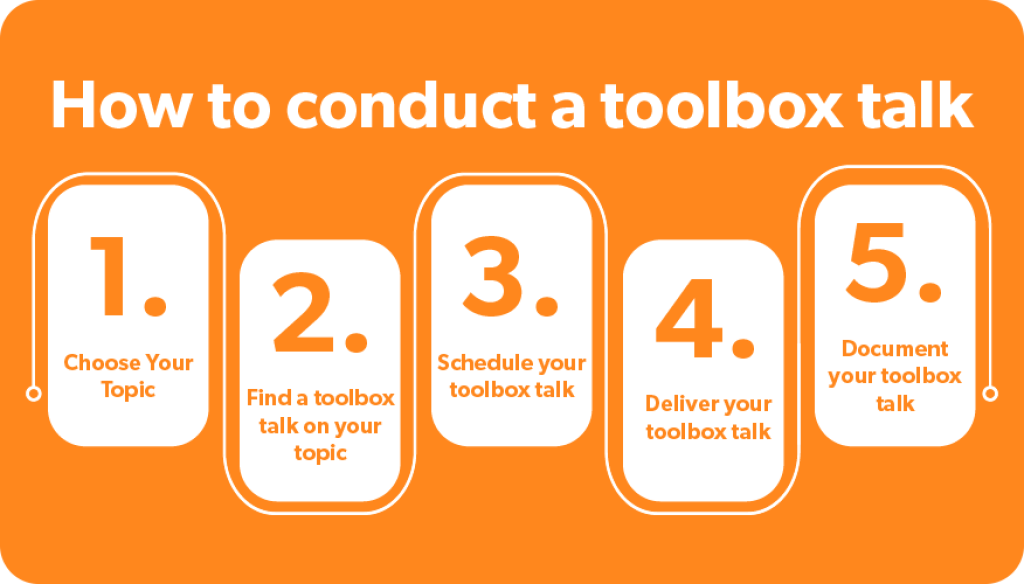
How to Run a High-Impact Toolbox Talk: A 5-Step Workflow
Make every talk count with this repeatable process.
Step 1: Choose the Right Topic Match it to the day’s highest risk. Use a rotating schedule but stay flexible.
Examples: - Ladder safety - Electrical hazards - Heat stress - Manual handling - Night work visibility
Step 2: Prepare in Advance Don’t wing it. Have a one-page outline: hazard, control, question.
Pro tip: Use visual aids—photos of past incidents, diagrams, or actual equipment.
Step 3: Gather the Team Ensure 100% attendance. No exceptions. Latecomers get a 2-minute recap.
Step 4: Engage, Don’t Lecture Start with a question: “What’s the biggest risk we face today?” Let workers respond.
Encourage stories: “Has anyone dealt with a similar situation?”
Step 5: Confirm Understanding and Commitment End with: “What will you do differently today?” or “Who’s checking the fire extinguisher?”
Document attendance and topic. Post it visibly if needed.
Tools and Platforms to Support Toolbox Talks
While a talk can happen with nothing but a clipboard, digital tools improve consistency, tracking, and compliance.
Here are five reliable options:
| Tool | Key Features | Best For |
|---|---|---|
| SafetyCulture (iAuditor) | Custom templates, photo uploads, analytics, offline access | Large teams needing audit trails |
| SiteDocs | Real-time reporting, integration with PPE logs, automated reminders | Industrial and remote sites |
| Procore | Embedded in construction project management, tracks attendance | General contractors |
| Fleetio Fleet Maintenance | Includes safety checklists and task linking | Maintenance and fleet teams |
| VoiceThread (DIY Option) | Record audio talks, share via app, collect feedback | Small crews wanting flexibility |
Choose based on your needs: simplicity, scalability, or integration with existing systems.
Building a Culture Where Toolbox Talks Stick
The best safety programs don’t rely on enforcement—they grow from ownership.
To make toolbox talks stick:
- Train leaders, not just workers. Supervisors must model engagement.
- Rotate facilitators. Let crew members lead occasionally—it builds accountability.
- Recognize participation. A simple “Thanks for speaking up” reinforces openness.
- Link talks to outcomes. Share near-miss reductions or audit results.
- Keep it human. Celebrate birthdays, acknowledge fatigue, check in emotionally.
When a worker says, “I’m not feeling 100% today,” and the team adjusts the plan—that’s culture.
Final Thoughts: Make Safety a Conversation, Not a Lecture
A toolbox talk isn’t magic. It won’t eliminate all risk. But it creates a rhythm of awareness that stops small oversights from becoming big incidents.
It turns safety from a poster on the wall into a voice in the huddle.
So tomorrow morning, don’t just gather your team. Ask them something. Listen. Confirm. Act.
That’s not just a toolbox talk—that’s leadership.
Frequently Asked Questions
What is the difference between a toolbox talk and a safety meeting? A toolbox talk is short, task-specific, and held daily at the worksite. A safety meeting is longer, broader in scope, and often covers policy or training updates.
How long should a toolbox talk last? Ideally 5 to 15 minutes. Any longer and attention drops; any shorter and depth suffers.
Who should attend a toolbox talk? All personnel involved in the day’s work, including supervisors, contractors, and temporary staff.
Can toolbox talks be conducted remotely? Yes—for office teams or dispersed crews, video calls work. But onsite crews should meet physically for better engagement.
Do you need to document every toolbox talk? Yes. Documentation proves compliance, tracks topics, and supports incident investigations.
What topics should be covered in toolbox talks? Focus on current hazards: PPE, equipment safety, weather impacts, emergency procedures, and task-specific risks.
How often should toolbox talks happen? Daily, before work begins. More frequently if high-risk tasks or changing conditions occur.
FAQ
What should you look for in What Is the Toolbox Talk and Why It Matters? Focus on relevance, practical value, and how well the solution matches real user intent.
Is What Is the Toolbox Talk and Why It Matters suitable for beginners? That depends on the workflow, but a clear step-by-step approach usually makes it easier to start.
How do you compare options around What Is the Toolbox Talk and Why It Matters? Compare features, trust signals, limitations, pricing, and ease of implementation.
What mistakes should you avoid? Avoid generic choices, weak validation, and decisions based only on marketing claims.
What is the next best step? Shortlist the most relevant options, validate them quickly, and refine from real-world results.