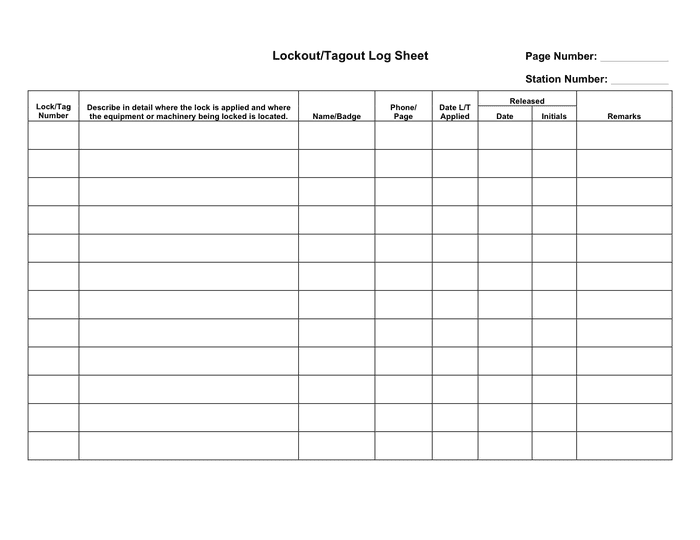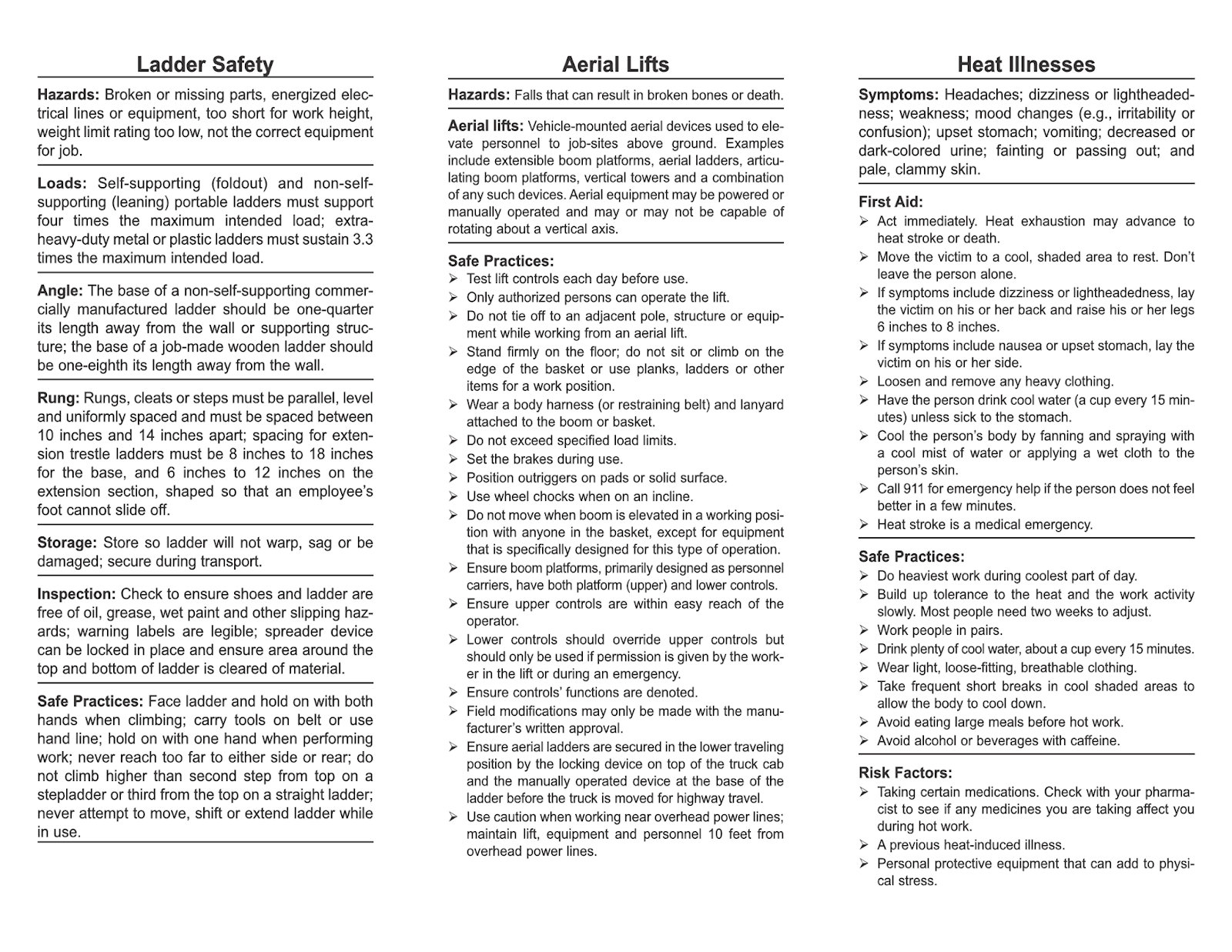
Workers skip safety briefings not because they don’t care—but because the content feels recycled, irrelevant, or poorly delivered. The difference between a routine checklist and a life-saving moment often comes down to one thing: relevance. Daily toolbox talks that hit the right nerve—tied to real hazards, current tasks, and site-specific risks—stick. That’s why free safety topics for daily toolbox talk PDFs are more than just handouts. They’re frontline tools for behavior change.
These PDFs streamline safety communication. They’re designed to be printed, projected, or shared digitally—no login, no paywall, no friction. The best ones follow a simple structure: hazard overview, real-world example, prevention steps, and discussion prompts. And when they’re free, accessible, and reusable, adoption soars.
Here’s how to find, use, and maximize high-impact safety topics—without spending a dime.
Why Free Toolbox Talk PDFs Work
Free safety PDFs succeed where other training fails because they’re built for action, not archives. Unlike hour-long compliance videos or outdated binders, these documents are:
- Instantly usable – Print and go in under a minute
- Task-specific – Aligned with current work (e.g., trenching, forklifts, overhead lifts)
- Discussion-driven – Include questions to engage crews
- Consistent – Ensure every crew gets the same core message
A roofing crew reviewing a “Working at Heights” PDF before climbing a ladder is more likely to double-check harnesses than one relying on memory. The visual reminder, paired with a 5-minute group talk, reinforces accountability.
But not all free PDFs are equal. The weakest ones are generic—phrased like policy manuals. The strongest mimic real conversations, anticipate worker pushback (“I’ve done this a hundred times”), and offer practical fixes.
Top 5 Sources for Free Safety Topics PDFs
You don’t need to create content from scratch. These trusted sources offer downloadable, ready-to-use toolbox talk PDFs—no registration required.
| Source | Topics Covered | Format | Customization? | Language |
|---|---|---|---|---|
| OSHA.gov | Fall protection, PPE, electrical safety | PDF, bilingual options | No | English, Spanish |
| NASP (National Association of Safety Professionals) | Hot work, scaffolding, confined space | Editable PDF | Limited | English |
| HSE UK (Health and Safety Executive) | Manual handling, slips/trips, CO exposure | PDF, PowerPoint | No | English |
| SafetyNow | Hazard communication, lockout/tagout | Print-ready PDF | Yes (pro version) | English |
| Construction Safety Council | Weather hazards, site vehicle safety | PDF, pocket guides | Yes (text fields) | English |
Pro tip: Bookmark the OSHA and HSE UK pages. They’re updated regularly and align with international safety standards. Even in the U.S., HSE’s plain-language PDFs are more readable than many domestic resources.

Avoid sites that require email submission for every download—this kills field usability. If a supervisor has to chase logins before a morning huddle, the talk won’t happen.
Most Effective Free Safety Topics (With Examples)
Generic topics get ignored. Focus on those that mirror real job conditions. Here are five high-impact, freely available safety discussion themes:
1. Eye Protection on the Job
- Real risk: A worker grinds metal without goggles. A shard enters his cornea.
- Prevention: Insist on ANSI-rated eyewear when dust, debris, or splash risks exist.
- Discussion prompt: “What tasks today involve flying particles? Is your eyewear rated for it?”
This topic is short (3–5 minutes), visual, and universally applicable—even in office-heavy sites during renovations.
2. Ladder Safety: Setup and Use
- Common mistake: Leaning a ladder at too shallow an angle (1:4 ratio rule often ignored).
- Key point: Always secure the top and bottom. No overreaching.
- Example: A painter overextends to the side, tipping the ladder. Result: a fractured wrist.
A good PDF includes a diagram of the 75.5° angle (4:1 rule) and a checklist: inspect rungs, wear dry shoes, face the ladder.
3. Hand Safety Around Machinery
- Shocking stat: Over 30% of workplace amputations involve hands.
- Critical practice: Never bypass machine guards. Use push sticks or hooks.
- Prompt: “Have you ever seen someone ‘just quickly’ clear a jam without locking out? What could go wrong?”
Pair this with a photo of a damaged glove to drive the point home.
4. Weather-Related Hazards (Heat/Cold)
- Real case: A laborer collapses from heat stress after 90 minutes in 95°F heat.
- Prevention: Rotate shifts, mandate breaks, provide water.
- Sign checklist: Dizziness, nausea, confusion = immediate action.
This is especially effective in seasonal work. A PDF with symptoms and cooldown steps becomes a field reference.
5. Slips, Trips, and Falls on Same Level
- Often overlooked: 25% of all reported injuries stem from same-level falls.
- Root causes: Wet floors, loose cables, cluttered walkways.
- Fix: “Clean as you go” rule. Report hazards immediately.
A simple image showing a tangled extension cord across a walkway makes the danger obvious.
These topics work because they’re narrow, visual, and tied to observed behavior—not abstract rules.
How to Run a Daily Toolbox Talk That Sticks
A PDF is only as good as the conversation it sparks. Avoid the “read and dismiss” trap.
Follow this 5-step workflow:
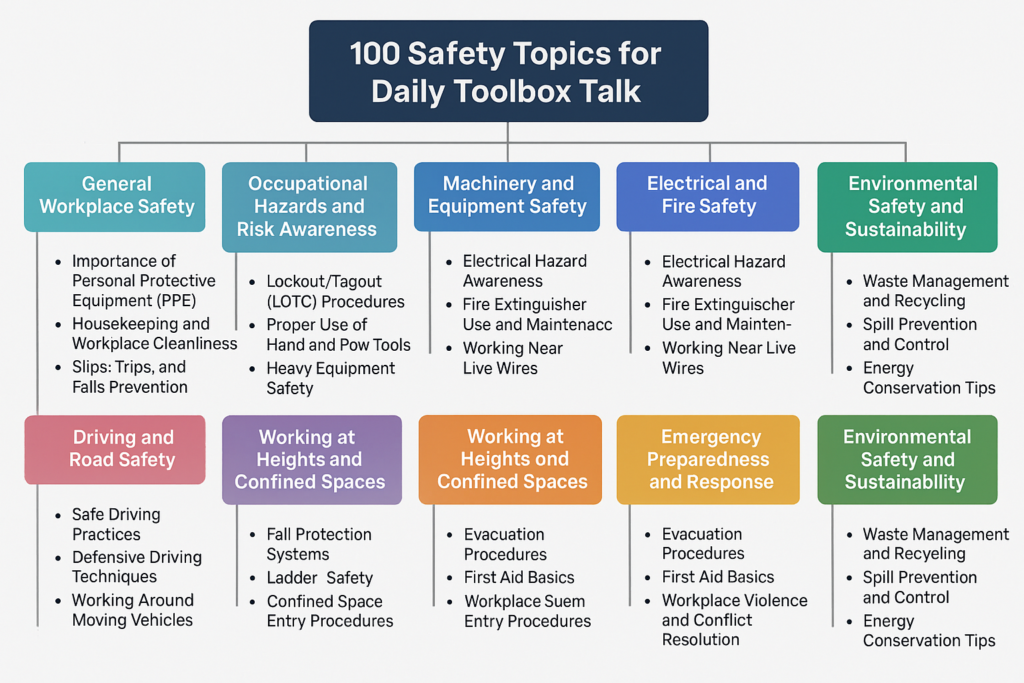
- Pick the right topic – Match it to the day’s work (e.g., “Overhead Hazards” before crane use).
- Print or display the PDF – Use a tablet or job site board if printing isn’t possible.
- Start with a question – “Who here has seen a near-miss with moving equipment?”
- Highlight one key action – “Today, we double-check blind spots before reversing.”
- Get signatures – Not for compliance theater—use sign-in sheets to confirm attendance and spark discussion.
Don’t: Read the entire document word-for-word. Do: Use the PDF as a guide, not a script.
Example: On a concrete pour day, use a “Heavy Equipment Blind Spots” PDF. Show the diagram, ask workers where they’d position themselves near a loader, and agree on a hand signal standard.
When workers contribute, they own the safety rule.
Customizing Free PDFs for Your Site
The best free PDFs allow light customization—adding your company name, site logo, or location-specific rules.
Here’s how to adapt them:
- Add site-specific examples: “Last month at Site B, a dropped tool hit a worker below—today’s talk applies directly.”
- Insert local emergency numbers – Replace generic contacts with on-site medics or supervisors.
- Embed near-miss reporting steps – “If you see something, say something—text SafetyTeam at 555-123.”
Some organizations use basic PDF editors (like Adobe Acrobat or free tools like PDFescape) to add fillable fields or checkboxes.
But avoid over-editing. The goal is clarity, not branding. A cluttered PDF with logos on every corner dilutes the message.
Common Mistakes That Undermine Toolbox Talks
Even with great PDFs, these mistakes kill effectiveness:
- Using the same topics on repeat – Workers tune out after the third “PPE” talk in two weeks.
- Holding talks after work has started – Once tools are in hand, attention drops.
- No follow-up – If hazards are reported but nothing changes, trust erodes.
- One person talking, everyone else silent – Engagement is the goal, not monologue.
Fix: Rotate talk leaders. Let crew leads run one session a week. It builds ownership and surfaces ground-level insights.
Also, don’t save all talks for Monday. Distribute them based on task risk, not the calendar.
Making Safety Talks a Habit, Not a Chore
The most successful safety cultures don’t treat toolbox talks as compliance boxes to tick. They frame them as peer-to-peer check-ins—like a pre-flight review.
When workers expect the talk and participate willingly, you’ve won.
Start small: Pick three high-risk tasks on your site (e.g.,高空作业, electrical work, excavation). Download the matching free PDFs. Use them consistently for two weeks. Then gather feedback.
Ask: - “Did the talk make you change how you worked today?” - “Was the example realistic?” - “Would you share this with a new hire?”
Revise based on answers. The goal isn’t perfection—it’s progress.
Free safety topics for daily toolbox talk PDFs aren’t magic. But in the right hands, they’re the simplest way to turn awareness into action.
Frequently Asked Questions
Where can I find free daily toolbox talk PDFs? OSHA, HSE UK, and the Construction Safety Council offer free, downloadable PDFs with no registration.
Are free safety topics OSHA-compliant? Many are, especially those from OSHA.gov or NASP. Always verify alignment with current OSHA standards for your industry.
Can I edit free toolbox talk PDFs? Some allow editing via fillable fields. Others are locked but can be adapted using PDF annotation tools.
How long should a toolbox talk last? Keep it between 5 and 10 minutes. Focus on one topic and encourage discussion.
Should every employee attend? Yes—especially those involved in high-risk tasks that day. Attendance records help track engagement.
What if workers don’t take talks seriously? Make them relevant. Use real near-misses, rotate speakers, and encourage open dialogue.
Do toolbox talks reduce accidents? Yes—when done consistently and tied to actual site risks, they improve hazard recognition and safe behavior.
FAQ
What should you look for in Free Safety Topics for Daily Toolbox Talk PDF Downloads? Focus on relevance, practical value, and how well the solution matches real user intent.
Is Free Safety Topics for Daily Toolbox Talk PDF Downloads suitable for beginners? That depends on the workflow, but a clear step-by-step approach usually makes it easier to start.
How do you compare options around Free Safety Topics for Daily Toolbox Talk PDF Downloads? Compare features, trust signals, limitations, pricing, and ease of implementation.
What mistakes should you avoid? Avoid generic choices, weak validation, and decisions based only on marketing claims.
What is the next best step? Shortlist the most relevant options, validate them quickly, and refine from real-world results.