Every year, hundreds of workers suffer severe injuries—or worse—because a machine unexpectedly powered on during maintenance. The lockout tagout definition isn’t just corporate jargon; it’s the foundation of a life-saving protocol. Lockout tagout (LOTO) refers to the practice of shutting down machines or equipment to isolate all energy sources and prevent accidental startup during servicing or maintenance.
At its core, LOTO is an energy control procedure. It ensures that dangerous machinery is completely de-energized before anyone performs service work. This isn’t about minor safety tweaks—it's a structured system designed to protect workers from electrocution, crushing, burns, and other catastrophic events caused by the sudden release of stored energy.
Understanding the lockout tagout definition goes beyond memorizing a textbook explanation. It means recognizing how this procedure fits into daily operations, what happens when it’s ignored, and how a single misstep can have irreversible consequences.
The Formal Lockout Tagout Definition
According to OSHA (Occupational Safety and Health Administration), the official lockout tagout definition is: A safety procedure that involves isolating all energy sources from a piece of equipment and applying a lock and tag to prevent unauthorized re-energization until maintenance or servicing is complete.
Key components include:
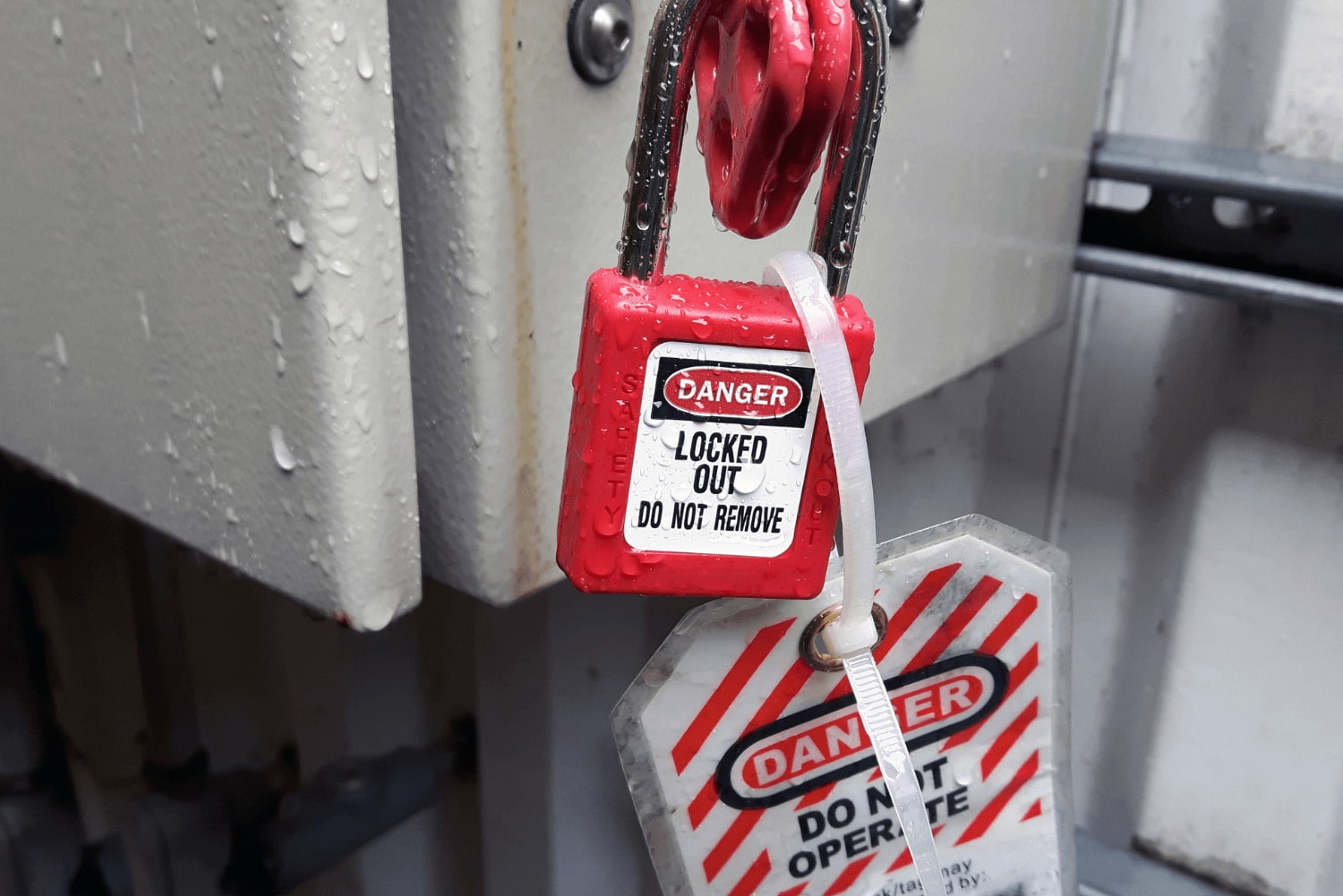
- Lockout: Physically securing an energy-isolating device with a lock so the equipment cannot be turned on.
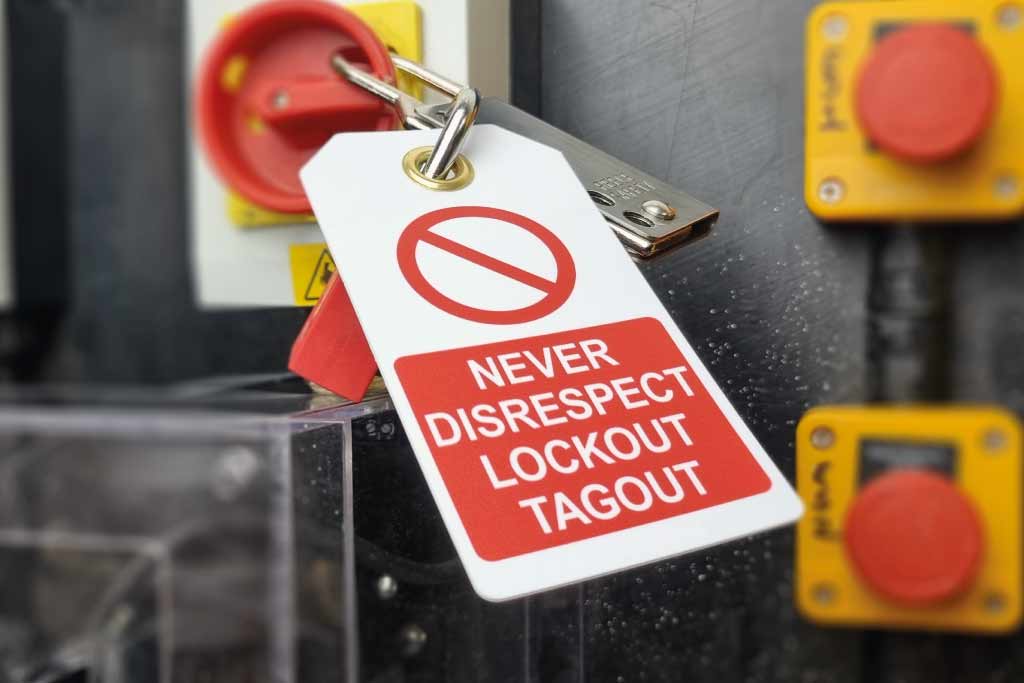
- Tagout: Attaching a warning tag to the locked device, indicating that work is in progress and the equipment must not be operated.
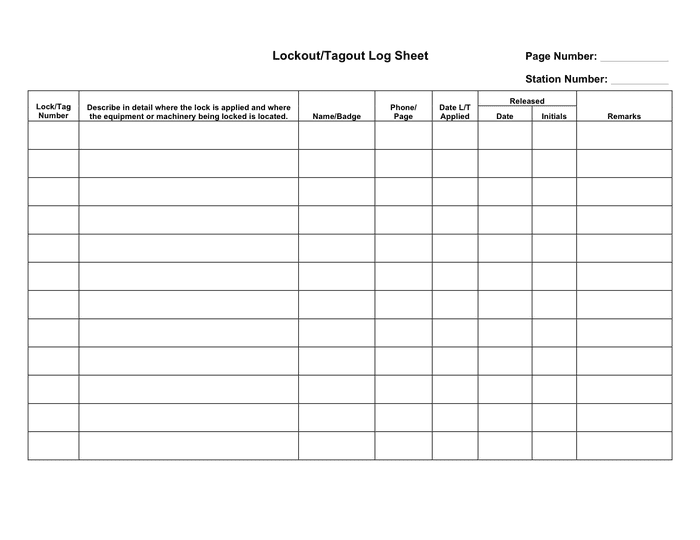
Lockout devices are typically padlocks, hasps, or valve locks. Tags contain critical information: the name of the worker, date, reason for lockout, and contact details.
This definition applies across industries—manufacturing, construction, utilities, and even laboratories—wherever hazardous energy exists.
Why Lockout Tagout Procedures Are Non-Negotiable
Imagine a technician clearing a jam in a conveyor belt. They assume the machine is off. But someone else, unaware of the maintenance, hits the start button. The consequences can be fatal.
LOTO eliminates this risk by enforcing accountability and visibility. It’s not just about turning off a switch; it’s about verifying zero energy state.
Consider these real-world examples:
- A maintenance worker servicing a hydraulic press is injured when a colleague restarts the system remotely.
- An electrician repairing a circuit panel is electrocuted because the breaker wasn’t properly locked out.
- A mechanic cleaning a mixing tank is caught in rotating blades after pneumatic pressure was not fully bled off.
Each case violates the core principles of the lockout tagout definition. And each is preventable.
Beyond human cost, non-compliance carries steep penalties. OSHA fines for LOTO violations regularly exceed $100,000 annually per site. More importantly, a single incident can damage morale, trigger investigations, and lead to operational shutdowns.
How Lockout Tagout Works: A Step-by-Step Breakdown
Understanding the definition is one thing. Implementing it effectively is another. A proper LOTO procedure follows seven structured steps:
- Preparation: Identify all energy sources (electrical, mechanical, hydraulic, pneumatic, thermal, chemical) and the authorized employee responsible.
- Notification: Inform all affected personnel that maintenance will begin and equipment will be locked out.
- Shutdown: Use normal stopping procedures to turn off the machine.
- Isolation: Shut off all energy sources using disconnects, valves, or blocks.
- Application of Locks and Tags: Each authorized worker applies their personal lock and tag. Group lockout boxes are used when multiple people are involved.
- Energy Dissipation: Release or block stored energy—bleed lines, ground circuits, lower suspended parts.
- Verification: Attempt to restart the machine (via normal controls) to confirm it cannot operate. Only after zero response is the system deemed safe.
Re-energizing follows reverse order: remove tools, ensure all workers are clear, remove locks and tags, notify staff, and restart.
One common mistake? Assuming a single lock is enough. OSHA requires each worker to apply their own lock. This “one person, one lock” rule ensures no one can unknowingly reactivate equipment.
Common Misconceptions About Lockout Tagout
Even seasoned professionals misinterpret the lockout tagout definition. Here are three widespread errors:
"Tagout Alone Is Enough" Tags are warnings, not physical barriers. OSHA allows tagout only when a lock cannot be applied—but it requires additional protective measures. Relying solely on tags increases risk because they can be ignored or removed.
"LOTO Only Applies to Large Machines" Small equipment like bench grinders, saws, or even office printers with moving parts can store hazardous energy. If it has a motor, battery, or pressurized component, LOTO applies.
"Maintenance Time Is Too Short to LOTO" Five-minute fixes are when accidents happen. Energy control isn’t optional based on duration. A moment’s distraction can lead to permanent injury.
Another pitfall? Using master keys or override procedures as shortcuts. These undermine the system’s integrity. If a lock must be removed without the owner present, strict protocols—like management approval and documented justification—are required.
Industries Where Lockout Tagout Is Critical
LOTO isn’t niche—it’s universal in high-risk environments. Key sectors include:
- Manufacturing: Assembly lines, robotic arms, stamping presses.
- Construction: Cranes, excavators, welding equipment.
- Energy and Utilities: Power plants, transformers, gas pipelines.
- Healthcare: Medical imaging devices, sterilization units.
- Food Processing: Mixers, slicers, conveyor ovens.
- Automotive: Paint booths, lifts, compression systems.
In each, energy sources vary, but the lockout tagout definition remains consistent: control energy, protect people.
A paper mill, for instance, may lock out a pulping machine using electrical disconnects and mechanical blocking. Meanwhile, an HVAC technician might isolate a rooftop unit by locking the circuit breaker and tagging the thermostat. Different tools, same principle.
Elements of an Effective LOTO Program
A strong LOTO program exceeds OSHA requirements. It’s not just about compliance—it’s about culture. Essential elements include:
- Written Procedures: Detailed, machine-specific instructions for every piece of equipment.
- Employee Training: Both authorized workers (who perform LOTO) and affected employees (who operate equipment) must understand their roles.
- Periodic Inspections: Annual audits to verify procedures are followed correctly.
- Clear Equipment Labeling: Visible indicators showing energy isolation points.
- Lockout Device Inventory: Standardized locks, tags, hasps, and storage systems.
One often-overlooked aspect? Shift changes. If a worker locks out equipment at the end of their shift,交接 procedures must ensure the lock stays in place until they return or a formal handover occurs. Temporary removal requires re-execution of the full LOTO process.
Real-World Impact: How LOTO Prevents Disasters
In 2019, OSHA cited a metal fabrication plant after a worker lost three fingers when a shear press activated during adjustment. The investigation found no lockout procedure was used—even though the machine had an energy isolation point.
Contrast this with a chemical plant that reduced maintenance incidents by 76% over three years after overhauling its LOTO program. They introduced color-coded locks, digital checklists, and monthly drills.
These cases show that understanding the lockout tagout definition isn’t academic—it’s operational. When done right, LOTO becomes second nature, like wearing a seatbelt.
One refinery reported that before LOTO, near-misses during turnaround operations were common. After implementing strict energy control protocols, those dropped to zero. Workers now treat any maintenance task—no matter how small—as a LOTO event.
Avoiding Pitfalls in LOTO Implementation
Even well-intentioned programs fail due to poor execution. Watch for these red flags:
- Generic Procedures: A one-size-fits-all LOTO guide won’t work. Each machine has unique energy sources and isolation points.
- Inadequate Training: Workers must know how to lock out, not just that they should. Hands-on drills are essential.
- Tag Degradation: Outdoor tags exposed to weather can fade or tear. Use durable, weather-resistant materials.
- Lack of Accountability: If supervisors don’t enforce LOTO, workers will bypass it. Leadership must model compliance.
A manufacturing facility once discovered that maintenance crews were skipping LOTO because locks were stored in a distant office. Simply relocating lock stations to the shop floor increased compliance by 90%.
Final Thoughts: Treat Lockout Tagout as a Lifeline
The lockout tagout definition is straightforward, but its execution demands precision, discipline, and constant vigilance. It’s not a box to check—it’s a promise to protect human life.
Every industrial site should ask: If a worker were servicing this machine right now, could it start on its own? If the answer isn’t an absolute “no,” the LOTO system needs improvement.
Start by auditing your highest-risk equipment. Verify that written procedures exist, locks are accessible, and every employee knows their role. Make LOTO part of safety meetings, not an afterthought.
Energy doesn’t discriminate. A millisecond of oversight can change everything. Respect the definition. Follow the steps. Save lives.
Frequently Asked Questions
What is the basic principle of lockout tagout? The basic principle is to isolate all energy sources from equipment and secure them with locks and tags to prevent accidental startup during maintenance.
Who is responsible for applying lockout tagout devices? Authorized employees—those trained to service equipment—are responsible for applying their own lock and tag.
Can multiple workers use one lock during LOTO? No. Each worker must apply their own personal lock. Group lockout boxes allow multiple locks while securing a single energy point.
What types of energy must be controlled under LOTO? Electrical, mechanical, hydraulic, pneumatic, thermal, chemical, and gravitational energy—all must be isolated and dissipated.
Is tagout as effective as lockout? Tagout is less secure than lockout because tags are warning devices, not physical restraints. OSHA permits tagout only when locks can’t be used, with extra safety measures.
How often should LOTO procedures be reviewed? Written procedures must be inspected annually, and employee retraining is required at least every 12 months.
What happens if a worker forgets to remove their lock? Only the worker who applied the lock should remove it. If unavailable, a formal removal process—requiring verification that the worker is clear and informed approval—must be followed.
FAQ
What should you look for in What Is Lockout Tagout Definition and Why It Matters? Focus on relevance, practical value, and how well the solution matches real user intent.
Is What Is Lockout Tagout Definition and Why It Matters suitable for beginners? That depends on the workflow, but a clear step-by-step approach usually makes it easier to start.
How do you compare options around What Is Lockout Tagout Definition and Why It Matters? Compare features, trust signals, limitations, pricing, and ease of implementation.
What mistakes should you avoid? Avoid generic choices, weak validation, and decisions based only on marketing claims.
What is the next best step? Shortlist the most relevant options, validate them quickly, and refine from real-world results.