Machines don’t warn you before they kill. A conveyor restarts during maintenance. A press cycles unexpectedly. A valve opens under pressure. These aren’t hypotheticals—they’re preventable tragedies rooted in one failure: missing or ineffective written lockout tagout procedures.
OSHA estimates that proper lockout tagout (LOTO) protocols prevent 120 fatalities and 50,000 injuries annually. Yet, in 2023 alone, LOTO violations ranked seventh on OSHA’s Top 10 Citations list. Why? Because having a procedure isn’t the same as having an effective one.
Real-world written lockout tagout procedures aren’t paperwork—they’re lifelines. They transform abstract safety policies into actionable, repeatable steps that protect workers in high-risk environments. This guide breaks down what makes these procedures work, how to build them right, and where most organizations fall short.
What Are Written Lockout Tagout Procedures?
At its core, a written lockout tagout procedure is a documented step-by-step process for safely de-energizing machinery and equipment before service or maintenance. It goes beyond张贴 a tag—it defines who, when, how, and what for every energy isolation.
These aren’t one-size-fits-all documents. A procedure for a 500-ton hydraulic press differs radically from one for a conveyor belt system or a chemical mixing tank. Each must reflect the unique energy sources (electrical, pneumatic, hydraulic, thermal, gravitational) and control points involved.
Key Components of a Valid Procedure
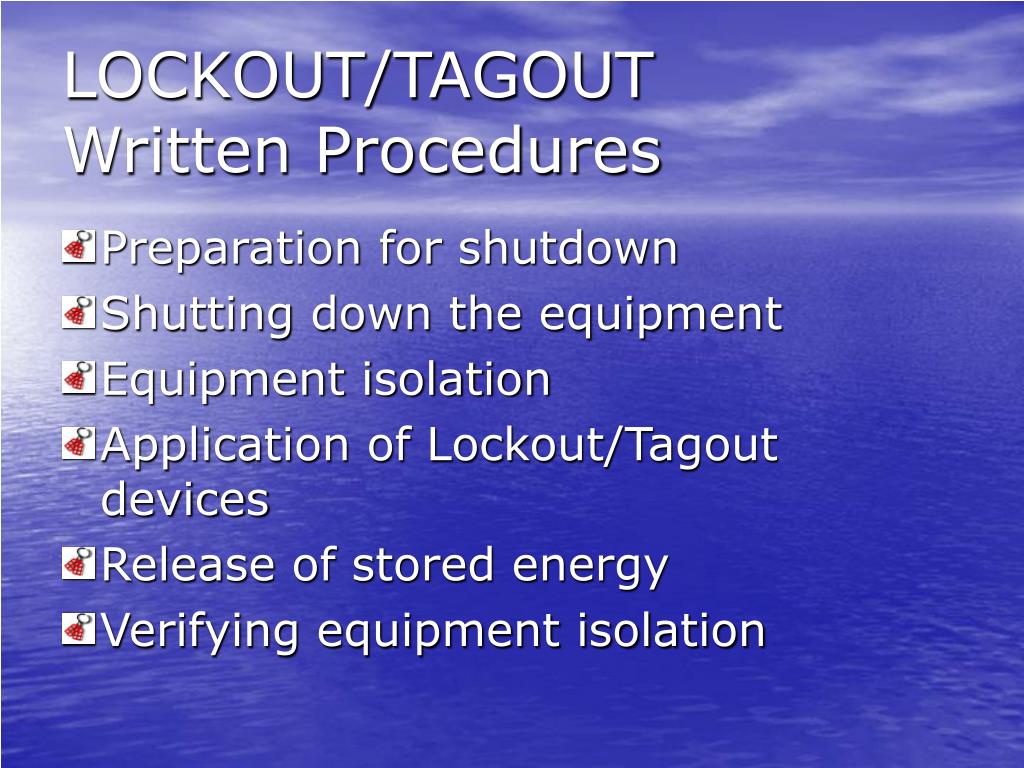
A compliant written LOTO procedure includes:
- Equipment identification (name, ID number, location)
- Energy sources identified and described (e.g., 480V main disconnect, pneumatic line at junction F3)
- Shutdown steps (order of operations to stop the machine)
- Isolation steps (specific disconnects, valves, blocks to engage)
- Application of locks and tags (who applies them, lock types, tag content)
- Energy dissipation (bleeding lines, draining capacitors, blocking moving parts)
- Verification of isolation (testing for zero energy—this is non-negotiable)
- Removal process (authorized employee recheck, communication, re-energizing steps)
Skip any of these, and the document becomes a liability rather than protection.
Why Most Written Procedures Fail
Many companies believe they’re compliant because they have binders full of LOTO procedures. In reality, audits reveal glaring flaws:
- Vague language: “Turn off the machine” instead of “Open circuit breaker CB-7 in Panel A2.”
- Missing verification steps: No instruction to test for zero energy after isolation.
- Generic templates: One procedure used across multiple machine types.
- Outdated documents: Procedures not updated after equipment modifications.
- No employee involvement: Crafted by EHS staff who’ve never operated the machine.
A midwestern packaging plant learned this the hard way when a technician lost three fingers. The written procedure said “isolate main power.” But it didn’t specify which disconnect or require voltage testing. The technician assumed he’d flipped the right switch—until the machine powered on.
How to Build an Effective Written LOTO Procedure
Effective procedures follow a repeatable structure rooted in OSHA 29 CFR 1910.147 and ANSI Z244.1. Here’s the workflow used by top-tier manufacturing sites:
Step 1: Conduct a Machine-Specific Energy Audit
Don’t guess. Walk the floor. For each machine:
- Map all energy sources (electrical, hydraulic, pneumatic, chemical, gravity)
- Identify isolation points (disconnects, valves, blocks)
- Note stored energy risks (springs, elevated parts, capacitors)
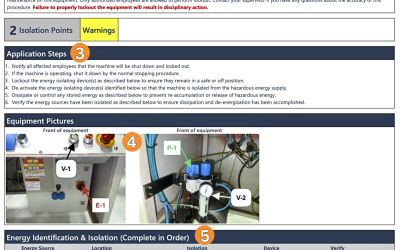
Use photos and diagrams. A visual reference reduces confusion during emergencies.
Step 2: Draft the Procedure
with Operators
Involve the people who actually service the equipment. Their input exposes workflow gaps. For example, a maintenance tech might point out that a secondary hydraulic line must be bled—even if it’s not on the OEM schematic.
Use clear, active language. Example:
Incorrect: “The machine should be turned off.” Correct: “Press the E-Stop button at Station 3. Confirm motor RPM reads 0 on HMI.”
Step 3: Standardize Format Across All Procedures
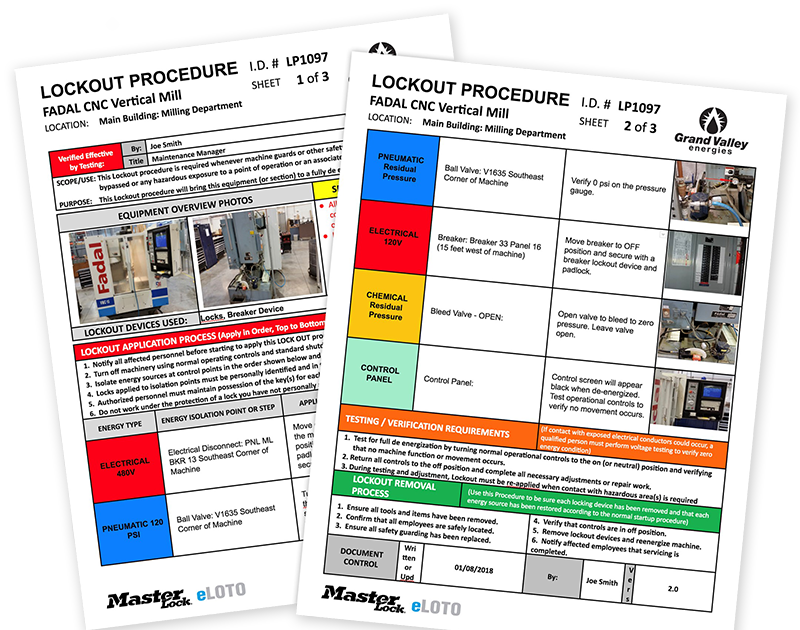
Consistency reduces errors. Use a template with the following sections:
| Section | Required Content |
|---|---|
| Equipment | Name, ID, location |
| Energy Types | List all (e.g., 480V AC, 120 psi air) |
| Authorized Employees | Names or roles permitted to perform LOTO |
| Steps to Shut Down | Sequential shutdown actions |
| Isolation Points | Specific disconnects/valves to secure |
| Lock/Tag Application | Where and how to apply devices |
| Energy Dissipation | Methods to release residual energy |
| Verification | How to confirm zero energy state |
| Removal Steps | Sequence for safe re-energizing |
Store these digitally with version control and physical backups near equipment.
Real-World Example: LOTO for a CNC Lathe
Let’s apply this to a common industrial machine.
Equipment: CNC Lathe, Model X7, Line 4, Cell B Energy Sources: 208V electrical, hydraulic chuck system, compressed air Authorized Employees: Maintenance Technicians 1–4, Supervisor Kim Tran
- Notify all affected employees that servicing will begin.
- Press “Cycle Stop” and wait for spindle to halt (confirm 0 RPM on control panel).
- Rotate mode selector to “Manual.”
- Open main power disconnect (DB-4, rear panel).
- Close hydraulic pressure valve (V-12, below coolant tank) and bleed line via relief port.
- Close air supply valve (AV-5, overhead manifold).
- Apply personal lock to DB-4 and tag with name, date, reason.
- Test for zero energy: Use multimeter to verify no voltage at control circuit. Attempt to restart via control panel—no response expected.
- Begin maintenance.
- Upon completion: Verify work area clear, tools removed.
- Communicate intent to restart to supervisor.
- Remove lock and tag.
- Re-energize in reverse order.
This level of detail eliminates ambiguity. It also provides a clear audit trail.
Common Mistakes That Undermine Compliance
Even organizations with strong safety cultures make these errors:
- Assuming training replaces documentation: Training supports procedures—but doesn’t substitute for them.
- Using tags without locks: Tags alone don’t provide physical protection. OSHA requires lockout unless tagout can be justified under specific conditions.
- Skipping group LOTO protocols: Multiple workers need coordinated procedures with a primary authorized employee.
- Failing to review annually: Procedures must be inspected at least once per year.
- Not documenting exceptions: Temporary bypasses (like testing during service) require written authorization and additional controls.
One automotive supplier reduced LOTO incidents by 76% in 18 months—simply by auditing and revising existing procedures to fix these flaws.
Digital Tools to Manage Written LOTO Procedures
Paper binders get lost, torn, or ignored. Forward-thinking companies use digital platforms to centralize and enforce compliance.
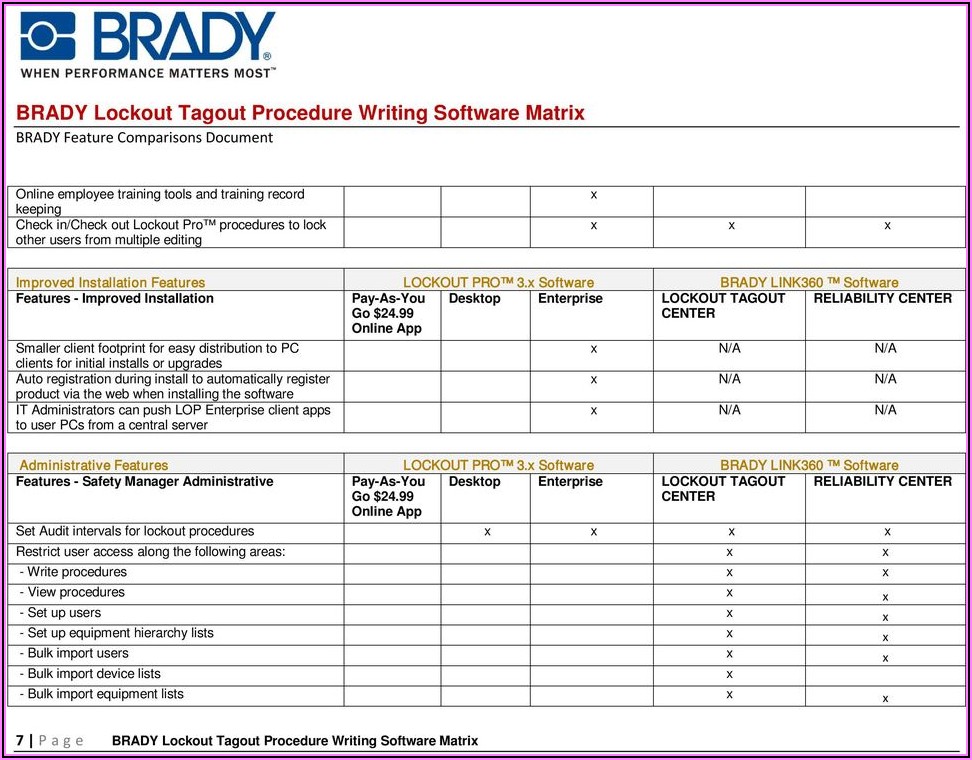
Here are five effective tools for managing written lockout tagout procedures:
- ProcessMAP LOTO
- - Cloud-based LOTO module with interactive equipment diagrams
- - Mobile access for field verification
- - Audit trail and compliance reporting
- UL’s eSolutions LOTO System
- - Supports complex group lockout scenarios
- - Integrates with CMMS and ERP systems
- - Built-in OSHA 1910.147 compliance checks
- Sphera LOTO Pro
- - Visual procedure builder with drag-and-drop interface
- - QR code scanning at equipment points
- - Real-time status tracking
- EHS Insight
- - Customizable LOTO templates
- - Automated review reminders
- - Incident linkage for root cause analysis
- Lockout Tagout Manager by Safesite
- - Mobile-first platform for small to mid-sized operations
- - Photo documentation of lock application
- - Offline mode for remote sites
These tools reduce human error, speed up compliance audits, and ensure procedures are always accessible where they’re needed.
The Role of Training and Audits
A perfect procedure is useless if workers don’t understand it. OSHA requires annual training for both authorized employees (those applying locks) and affected employees (those operating equipment).
Training must include:
- Hands-on practice with locks, tags, and energy isolation
- Review of specific procedures tied to their work
- Recognition of tag misuse (e.g., ignoring a tag)
- Group LOTO coordination
Equally critical: annual audits. An impartial auditor must observe a representative sample of procedures in action and verify alignment with written documents. Findings must be documented, and deficiencies corrected within 30 days.
One food processing plant discovered that 40% of LOTO attempts failed verification—despite staff claiming full compliance. The audit revealed workers were skipping lock application during “quick fixes.” The fix? Redesigned procedures with clearer escalation paths and management oversight.
Make Written LOTO Procedures Actionable, Not Academic
The goal isn’t to check an OSHA box. It’s to create documents that are actually used—daily—by real people under pressure.
That means:
- Printing procedures and placing them near equipment
- Using color coding and icons for faster comprehension
- Updating them immediately after equipment changes
- Linking them to work orders in maintenance systems
- Rewarding adherence, not punishing it
A paper mill slashed unplanned downtime by 34% after integrating LOTO procedures into their digital work order system. Technicians couldn’t start a job without electronically acknowledging the correct procedure.
Conclusion: Procedures That Save Lives
Written lockout tagout procedures are among the most powerful tools in workplace safety—if they’re done right. They must be specific, accurate, accessible, and lived, not just filed.
Start today: Pick one high-risk machine. Walk through it with the technician who services it. Draft or revise the procedure together. Test it. Verify it. Repeat.
Compliance isn’t a project. It’s a practice. And in high-energy environments, the difference between a close call and a catastrophe is often just one missing step in a written procedure.
FAQ
What must a written lockout tagout procedure include? It must detail equipment identification, energy sources, shutdown steps, isolation points, lock/tag application, energy dissipation, verification of zero energy, and removal procedures.
Who is responsible for writing LOTO procedures? The employer is responsible, but input should come from maintenance staff and operators who work with the equipment daily.
How often should written LOTO procedures be reviewed? At least annually, and whenever equipment, processes, or controls change.
Can digital procedures replace printed ones? Yes, if they’re accessible to authorized employees during servicing and include the same details as printed versions.
Do all machines need a written LOTO procedure? Yes, if they have hazardous energy sources and require servicing or maintenance where unexpected startup could cause injury.
What’s the difference between lockout and tagout? Lockout uses a physical lock to prevent re-energizing. Tagout uses a warning tag. Lockout is required unless tagout can be justified under OSHA’s criteria.
Can one procedure cover multiple machines? Only if they are identical in energy sources, controls, and isolation points. Otherwise, each machine needs its own procedure.
FAQ
What should you look for in Written Lockout Tagout Procedures That Actually Work? Focus on relevance, practical value, and how well the solution matches real user intent.
Is Written Lockout Tagout Procedures That Actually Work suitable for beginners? That depends on the workflow, but a clear step-by-step approach usually makes it easier to start.
How do you compare options around Written Lockout Tagout Procedures That Actually Work? Compare features, trust signals, limitations, pricing, and ease of implementation.
What mistakes should you avoid? Avoid generic choices, weak validation, and decisions based only on marketing claims.
What is the next best step? Shortlist the most relevant options, validate them quickly, and refine from real-world results.