Most industrial accidents involving machinery aren’t due to mechanical failure—they stem from human error during maintenance. One overlooked but critical safeguard? Proper lockout tagout (LOTO) procedures. Despite widespread OSHA regulations, many workers still misunderstand or bypass LOTO protocols, putting themselves and others at risk.
A lockout tagout safety quiz isn’t just a training box to check—it’s a vital tool for identifying knowledge gaps, reinforcing safety culture, and preventing life-threatening incidents. If your team can’t confidently answer core LOTO questions, they’re already one step closer to disaster.
This article presents a realistic, challenging lockout tagout safety quiz—plus explanations, common missteps, and practical insights to strengthen your organization’s energy control practices.
Why a Lockout Tagout Safety Quiz Matters
Safety quizzes aren’t busywork. When designed correctly, they reveal whether employees truly understand why LOTO exists—not just how to follow steps.
OSHA standard 29 CFR 1910.147 mandates that employers implement a formal energy control program, including periodic inspections and employee retraining every 12 months. A well-structured LOTO safety quiz serves three key purposes:
- Verification of Understanding – Can workers identify all energy sources on a machine?
- Reinforcement of Procedures – Do they know the sequence: shut down, isolate, lock, tag, verify?
- Compliance Documentation – Quizzes provide auditable proof of training.
Without regular assessment, assumptions replace accountability. One plant manager assumed his team was LOTO-compliant—until a quiz revealed 60% couldn’t define “authorized vs. affected employee.” That gap preceded a near-miss incident weeks later.
Core Concepts Every Quiz Should Test
An effective lockout tagout safety quiz doesn’t ask vague, theoretical questions. It targets real-world decision-making. These foundational areas should be central to any assessment:
Energy Source Identification
Machines rarely rely on a single power source. Employees must recognize all potential hazards:
- Electrical
- Hydraulic
- Pneumatic
- Mechanical (springs, gravity)
- Chemical
- Thermal
Sample Quiz Question: Which of the following is NOT an energy source commonly controlled by LOTO? A) Residual pressure in a hydraulic line B) Gravity acting on a suspended load C) Ambient room temperature D) Compressed air in a pneumatic cylinder
Correct Answer: C – Ambient temperature isn't an isolated energy source under LOTO scope.
A surprising number of workers fail to account for stored energy—like a flywheel that continues spinning after shutdown. This oversight leads to 30% of LOTO-related injuries.
Authorized vs. Affected Employees
OSHA makes a clear distinction:
- Authorized employees perform LOTO and service equipment.
- Affected employees operate or use the equipment but don’t service it.
Sample Quiz Question: Janet operates a conveyor system but never opens guards or performs maintenance. Who is she? A) Authorized employee B) Affected employee C) Safety observer D) Supervisor
Correct Answer: B
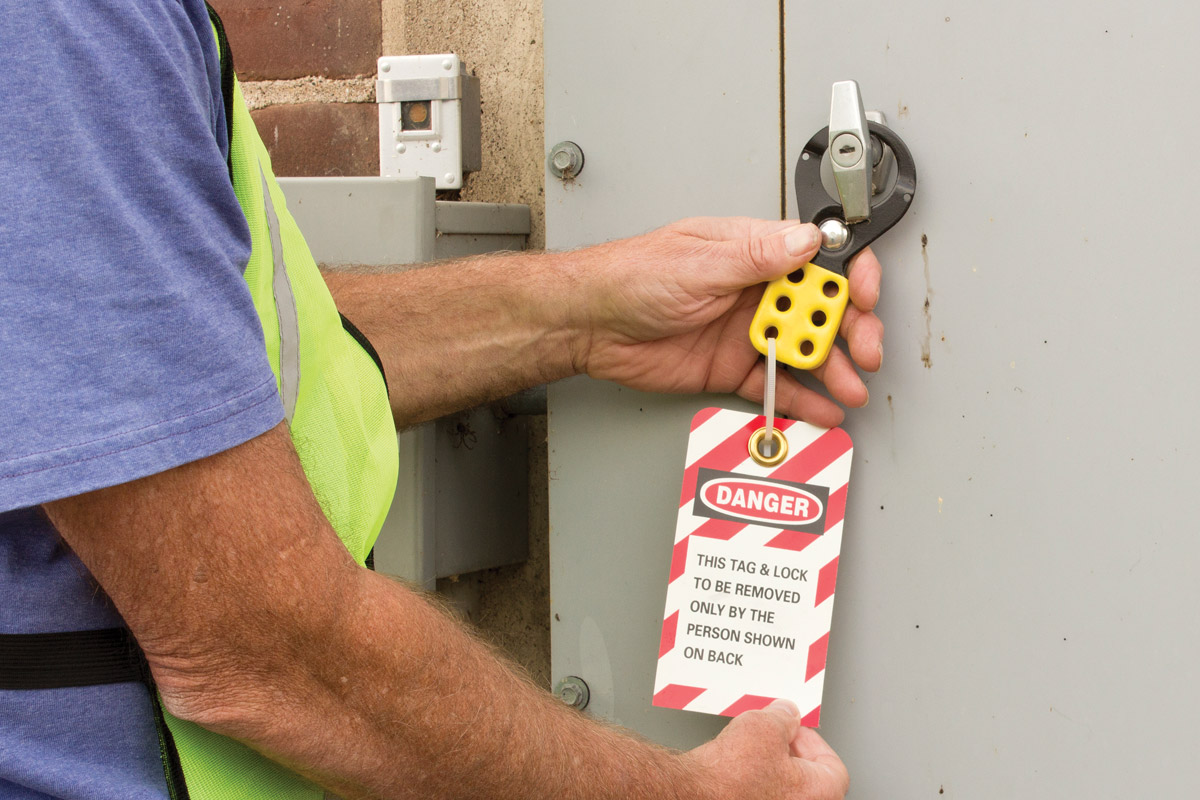
Misclassifying workers leads to improper training. Affected employees need LOTO awareness; authorized ones need full procedural training—including padlock use and verification steps.
The 5-Step LOTO Procedure
Every quiz should test mastery of the sequence:
- Prepare – Know the type and magnitude of energy.
- Shut Down – Use proper controls to stop equipment.
- Isolate – Disconnect or block energy sources.
- Apply Locks/Tags – Each worker uses their personal lock.
- Verify Isolation – Attempt to restart (with safeguards).
Sample Quiz Question: After locking out a press machine, Tomas tries to restart it—but the control panel is out of sight. What should he do? A) Assume the lockout is effective B) Ask a coworker to check C) Physically go to the panel and test D) Proceed with maintenance
Correct Answer: C – Verification must be positive and direct. Assumptions are dangerous.
Skipping verification is one of the most common—and deadly—mistakes. OSHA cites this lapse in over 40% of LOTO violations.
Real-World Lockout Tagout Safety Quiz (10 Questions)
Test your team’s readiness with this benchmark quiz. Answers and explanations follow.
- What is the primary purpose of a tagout device when used alone?
- A) To provide a physical barrier to energy B) To warn others not to operate equipment C) To replace the need for locks D) To indicate maintenance completion
- Which of the following best describes "group lockout"?
- A) One person applies multiple locks for different energy sources B) Each worker places their own lock on a single isolation point C) Supervisors apply locks for all team members D) Tags are used instead of locks for efficiency
- When must a periodic inspection of LOTO procedures be performed?
- A) Every 6 months B) Annually C) Only after an incident D) At management’s discretion
- Residual energy must be relieved before work begins. Which method is acceptable?
- A) Letting pressure bleed off naturally B) Opening a relief valve under supervision C) Waiting 5 minutes after shutdown D) Using the machine’s normal controls
- An employee returns to work after vacation and finds their lock still on a machine. What should they do?
- A) Remove the lock and resume work B) Leave the lock in place and notify a supervisor C) Cut the lock off with bolt cutters D) Ask a coworker to remove it
- Who is responsible for ensuring LOTO procedures are followed?
- A) The safety officer only B) The maintenance supervisor C) Every authorized employee D) OSHA inspectors
- Which statement about lockout devices is true?
- A) They must be color-coded by department B) They must be durable, standardized, and identifiable C) They can be shared between workers D) Tags alone are sufficient for full protection
- Before re-energizing equipment, what must be done?
- A) Notify all employees in the area B) Ensure all tools are removed and employees are clear C) File a work completion report D) Both A and B

- What makes a lockout device "employee-specific"?
- A) It has the employee’s photo B) It is keyed alike for team access C) Only the employee holds the key D) It is stored in their locker
- Failure to control hazardous energy causes approximately how many workplace fatalities per year?
- A) 50–100 B) 120–140 C) 200+ D) 500+
Answer Key & Explanations
- B – Tags are warning devices, not physical restraints. They should only be used when locks aren’t feasible.
- B – Each worker applies their own lock to a hasp or lockbox, ensuring individual control.
- B – OSHA requires annual inspections of procedures and employee practices.
- B – Active, controlled release under supervision is required. Passive dissipation is unreliable.
- B – Locks should never be removed by others. A formal removal procedure must be followed.
- C – Accountability is individual. Each authorized employee must verify the process.
- B – OSHA requires lockout devices to be durable, standardized, and identifiable to the employee.
- D – Both communication and physical clearance are mandatory before re-energizing.
- C – Personal locks must only be removable by the employee who applied them.
- B – OSHA estimates 120+ fatalities annually due to uncontrolled hazardous energy.
Scoring: - 9–10 correct: Strong understanding - 7–8: Needs minor reinforcement - Below 7: Immediate retraining required
Common Quiz Mistakes and How to Fix Them
Even experienced teams make missteps. Here are frequent errors—and how to correct them:
Mistake: Assuming "tagout-only" is sufficient Reality: Tags don’t physically prevent startup. They’re less reliable than locks. Fix: Train that tags are secondary unless engineering controls prevent lock use.
Mistake: One lock per team Reality:
This breaks the "personal control" principle. Fix: Use group lockout hasps—each technician applies their own lock.
Mistake: Skipping verification Reality: 70% of LOTO injuries occur during restart or verification attempts. Fix: Make "attempted startup" a mandatory, documented step.
Mistake: Incomplete energy source inventory Reality: Workers often miss gravity or spring tension. Fix: Use equipment-specific LOTO checklists during training.
Integrating Quizzes into Your Safety Program
A one-time quiz has limited impact. To build lasting compliance:
- Administer quizzes annually as part of refresher training.
- Use results to tailor training—if 40% miss stored energy questions, focus there.
- Conduct "blind" spot checks—walk through a maintenance scene and quiz on the spot.
- Include supervisors—they often lack hands-on LOTO knowledge.
One manufacturing plant reduced LOTO incidents by 80% after introducing biannual quizzes and public score tracking. Transparency created accountability.
Take Action: Strengthen Your LOTO Program Today
A lockout tagout safety quiz isn’t just a test—it’s a diagnostic tool. Use it to uncover hidden risks, reinforce critical habits, and protect your team from preventable harm.
Don’t wait for an incident to prove your program’s weakness. Administer a quiz this week. Review results honestly. Retrain where needed.
Safety isn’t compliance—it’s culture. And culture starts with knowledge.
Frequently Asked Questions
What is the purpose of a lockout tagout safety quiz? It assesses employee understanding of hazardous energy control, ensures compliance with OSHA standards, and identifies training gaps.
How often should LOTO quizzes be given? Annually, at minimum, to align with OSHA’s requirement for periodic inspections and retraining.
Can tagout be used instead of lockout? Only if a lock cannot be applied. Tagout provides less protection and requires additional safety measures.
Who needs to take a LOTO safety quiz? All authorized employees who perform maintenance, and affected employees who operate equipment.
What happens if an employee fails the quiz? They must be retrained before returning to tasks involving energy isolation.
Should supervisors take the same quiz? Yes—supervisors must understand procedures to enforce them correctly and safely.
Are online LOTO quizzes effective? Yes, if they include scenario-based questions and are followed by review sessions.
FAQ
What should you look for in Lockout Tagout Safety Quiz: Test Your Knowledge Now? Focus on relevance, practical value, and how well the solution matches real user intent.
Is Lockout Tagout Safety Quiz: Test Your Knowledge Now suitable for beginners? That depends on the workflow, but a clear step-by-step approach usually makes it easier to start.
How do you compare options around Lockout Tagout Safety Quiz: Test Your Knowledge Now? Compare features, trust signals, limitations, pricing, and ease of implementation.
What mistakes should you avoid? Avoid generic choices, weak validation, and decisions based only on marketing claims.
What is the next best step? Shortlist the most relevant options, validate them quickly, and refine from real-world results.