Equipment failure doesn’t always make noise before it kills. A machine that seems powered down can still hold lethal energy—electrical, hydraulic, pneumatic, or mechanical. That’s why lockout tagout (LOTO) isn’t just a safety procedure; it’s a legal and operational necessity. People don’t fail LOTO because they ignore it—they fail because they misunderstand it. This article cuts through the confusion with direct answers to the most pressing lockout tagout questions, grounded in real-world use and OSHA standards.
What Is Lockout Tagout and Why Does It Matter?
Lockout tagout is a safety procedure used to ensure dangerous machines are properly shut off and cannot be restarted before maintenance or servicing is complete. "Lockout" refers to physically locking energy-isolating devices—like circuit breakers or valve handles—so they can’t be activated. "Tagout" means placing a visible warning tag that identifies who locked the device, why, and when.
This isn’t about red tape. It’s about preventing amputations, electrocutions, and crushing injuries. According to OSHA, nearly 10% of serious accidents in manufacturing involve improper machine guarding or energy control—many of which could have been prevented with correct LOTO execution.
Real-World Example: A technician is clearing a jam in a conveyor system. The operator thinks the job is done and hits the start button. Without LOTO, the conveyor powers on mid-repair. Result: severe hand injury. With LOTO, the lock prevents startup, and the tag tells the operator, “Do not operate—Jane Smith is inside.”
Who Is Responsible for Implementing Lockout Tagout?
Responsibility in LOTO isn’t limited to one person—it’s a shared chain of accountability.
- Authorized Employees: These are trained individuals who physically lock out machines. They understand energy types, isolation points, and verification methods.
- Affected Employees: Operators who use machines but don’t perform maintenance. They must recognize LOTO devices and never bypass them.
- Employers: Responsible for developing written LOTO procedures, providing training, supplying locks and tags, and enforcing compliance.
Common Mistake: A supervisor assumes that because a machine has a lock, it’s safe. But if the authorized employee didn’t verify zero energy state (using a voltage tester or pressure gauge), the lock is just theater.
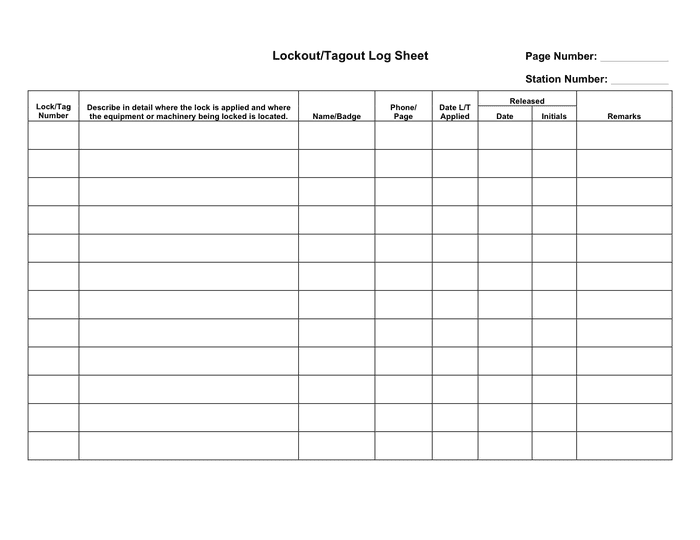
Workflow Tip: Use a LOTO log sheet where authorized employees document each step: shutdown, isolation, lock application, verification. This creates a traceable audit trail.
What Equipment Requires Lockout Tagout?
Any machine or equipment that poses a hazardous energy risk during servicing must be included in a LOTO program. This includes:
- Industrial presses and stamping machines
- Conveyor systems
- Boilers and steam lines
- Electrical panels and switchgear
- Hydraulic and pneumatic systems
- Robotic workcells
Limitation: Some equipment is exempt under OSHA 1910.147(a)(2)(ii), such as cord-connected devices that are unplugged and under the exclusive control of the servicing employee. For example, a handheld drill unplugged and held by the technician doesn’t need a formal lockout—but an industrial mixer with remote power does.
Use Case: A maintenance team services a large industrial oven. The oven uses gas, electricity, and thermal energy. The team locks out the main electrical disconnect, closes and locks the gas valve, and tags the thermal release system. Without addressing all three, residual heat or gas could ignite.
What Are the Steps in a Proper Lockout Tagout Procedure?
A successful LOTO sequence is methodical. Deviating even slightly increases risk. Here are the seven essential steps:
- Notify Affected Personnel
- Alert all operators and nearby workers that maintenance is about to begin.

- Shut Down the Machine
- Use normal stopping procedures—don’t rely on e-stops alone.
- Isolate Energy Sources
- Turn off circuit breakers, close valves, block moving parts.
- Apply Locks and Tags
- Use individual locks (no group locks unless justified), and complete tag information.
- Release Stored Energy
- Bleed pressure, drain capacitors, lower suspended loads.
- Verify Zero Energy State
- Test the machine at the point of operation—try to start it (safely) or use detection tools.
- Perform Maintenance
- Only now should service work begin.
Critical Insight: Step 6 is where most failures occur. A lockout isn’t valid until you prove the machine can’t start. If you skip verification, you’re gambling.
Can Multiple Workers Use the Same Lock?
No. Each authorized employee must apply their own lock and tag. This is known as the "one person, one lock, one key" rule.
Why It Matters: Imagine three technicians working on a press. If they all use one lock, one person finishing early could remove it—unknowingly re-energizing the system while others are still inside.
Practical Solution: Use a group lockout box. Each worker places their lock on the energy-isolating device, then stores their key in the box. The box remains locked until all tasks are complete and every worker removes their lock.
Example Scenario: A team is repairing a large packaging line. They use a hasp with multiple lock points. Each technician applies their personal lock. No one can restart the machine until all locks are removed—ensuring collective safety.
What’s the Difference Between Lockout and Tagout?
While often used together, lockout and tagout serve different purposes.
| Feature | Lockout | Tagout |
|---|---|---|
| Physical Control | Yes – prevents operation | No – only warns |
| Security Level | High | Lower – relies on compliance |
| OSHA Preference | Required where feasible | Allowed only if lockout isn’t possible |
OSHA mandates lockout as the primary method. Tagout alone is permitted only if the employer can prove that locking isn’t feasible—and even then, additional safety measures (like removing valves or circuit breakers) must be used.
Common Mistake: Using a tag to block a circuit breaker instead of locking it. If the tag falls off or is ignored, the machine can be energized. A lock physically prevents access.
Best Practice: Always use lockout devices when possible. Reserve tagout for situations like incompatible lock points or temporary setups—never as a routine substitute.
How Often Should Lockout Tagout Training Be Updated?
OSHA requires retraining:
- At least once every 12 months
- Whenever there’s a change in job duties, machinery, or procedures
- After any audit shows a lack of understanding or procedural deviation
But annual training isn’t enough if it’s just a video and a quiz. Effective training includes hands-on practice.
- Realistic Training Workflow:
- Review written procedures for specific equipment
- Conduct a live mock lockout on a non-operational machine
- Test energy verification techniques
- Quiz with scenario-based questions (e.g., “What would you do if a lock is missing its tag?”)
Red Flag: If employees can’t list the three energy sources on their primary machine, retraining has failed.
What Are Common Lockout Tagout Violations?
Even experienced teams make mistakes. The most common OSHA-cited LOTO violations include:
- Lack of documented procedures – No written steps for specific machines
- Inadequate training – Employees can’t demonstrate LOTO steps
- Failure to verify isolation – Skipping energy checks after lock application
- Using tagout without justification – When lockout devices are available
- Group lockout errors – One person removing multiple locks

Case Example: A facility was fined $120,000 after a worker was injured during cleaning. Investigation found no written LOTO procedure for the machine, and the technician used a tag instead of a lock—even though a lockable disconnect existed.
Prevention Tip: Conduct quarterly LOTO audits. Randomly select a machine and have an employee perform the full procedure. Observe and document gaps.
What Tools Support Effective Lockout Tagout? Using the right equipment increases compliance and reduces risk. Here are five essential LOTO tools:
| Tool | Purpose | Best For |
|---|---|---|
| Padlocks with Unique Keys | Personal locks that only the employee opens | Individual accountability |
| Lockout Hasps | Allows multiple locks on one isolation point | Group maintenance tasks |
| Valve Lockouts | Secures open or closed valves | Pneumatic, hydraulic systems |
| Circuit Breaker Locks | Prevents breaker from being switched on | Electrical panels |
| Group Lockout Stations | Centralized boxes for multi-worker control | Complex systems with team work |
Pro Tip: Color-code locks by department (e.g., red for maintenance, blue for electricians). This helps supervisors quickly spot unauthorized or missing devices.
How Can You Improve LOTO Compliance in Your Facility?
Compliance isn’t about fear—it’s about culture. Start with these steps:
- Map All Energy Sources
- Create an energy control inventory for every machine. Include electrical, mechanical, hydraulic, chemical, and thermal points.
- Develop Machine-Specific Procedures
- Generic LOTO steps fail. Write exact instructions: “Turn off Main Power Switch #3, lock with personal lock, bleed air pressure via Valve A.”
- Use Visual Aids
- Post LOTO flowcharts near high-risk equipment. Include photos of lock points and tag placement.
- Empower Employees
- Let workers suggest improvements. If a lock is hard to reach, fix the design—not the procedure.
- Audit and Adapt
- Review LOTO performance monthly. Track near-misses and procedure deviations.
Real-World Win: A food processing plant reduced LOTO incidents by 70% in one year by adding QR codes to machines. Scanning the code pulled up the exact LOTO procedure on a mobile device—reducing confusion during shift changes.
Lockout tagout isn’t a compliance box to check—it’s a lifecycle of awareness, discipline, and verification. The right answers to LOTO questions prevent injuries, avoid fines, and build a culture where safety is non-negotiable. Start today: audit one machine, verify one procedure, train one team. Safety isn’t perfect on day one, but it must be intentional every day.
Frequently Asked Questions
What is the first step in a lockout tagout procedure? The first step is notifying all affected employees that maintenance will begin and a lockout will be applied.
Can a tag be used instead of a lock? Only if a lock cannot be used and the employer justifies it. Tagout alone is less secure and requires extra protective measures.
Who can remove a lockout device? Only the authorized employee who applied the lock may remove it, unless a formal retrieval procedure is followed.
Do all machines need lockout tagout? Any machine with hazardous energy during servicing requires LOTO. Minor tool changes or routine tasks may be exempt under specific conditions.
What should a LOTO tag include? The tag must list the employee’s name, department, date, reason for lockout, and contact information.
How do you handle shift changes during LOTO? The outgoing employee must hand over lock responsibility to the incoming authorized worker, who applies their own lock before the first is removed.
Is LOTO required for battery-powered tools? If the tool is cordless and under exclusive control of the employee (e.g., handheld drill), LOTO isn’t required. Fixed or high-energy battery systems may require it.
FAQ
What should you look for in Lockout Tagout Questions and Answers Explained Clearly? Focus on relevance, practical value, and how well the solution matches real user intent.
Is Lockout Tagout Questions and Answers Explained Clearly suitable for beginners? That depends on the workflow, but a clear step-by-step approach usually makes it easier to start.
How do you compare options around Lockout Tagout Questions and Answers Explained Clearly? Compare features, trust signals, limitations, pricing, and ease of implementation.
What mistakes should you avoid? Avoid generic choices, weak validation, and decisions based only on marketing claims.
What is the next best step? Shortlist the most relevant options, validate them quickly, and refine from real-world results.