Every year, preventable injuries occur during equipment maintenance because proper energy control isn’t enforced. A single overlooked valve or an unsecured power source can lead to catastrophic incidents. The lockout tagout lock box isn’t just another piece of safety gear—it’s the central control point for isolating hazardous energy in multi-person, multi-step maintenance scenarios. When used correctly, it prevents accidental startups, protects lives, and keeps operations compliant with OSHA standards.
But too many facilities treat lockout boxes as afterthoughts—shoved in a corner, poorly labeled, or worse, bypassed altogether. The real value isn’t in owning a lockout box. It’s in integrating it into a disciplined, verifiable LOTO workflow.
This article breaks down the mechanics, applications, and operational essentials of lockout tagout lock boxes—the role they play, how to choose the right one, and where organizations commonly fail.
What Is a Lockout Tagout Lock Box?
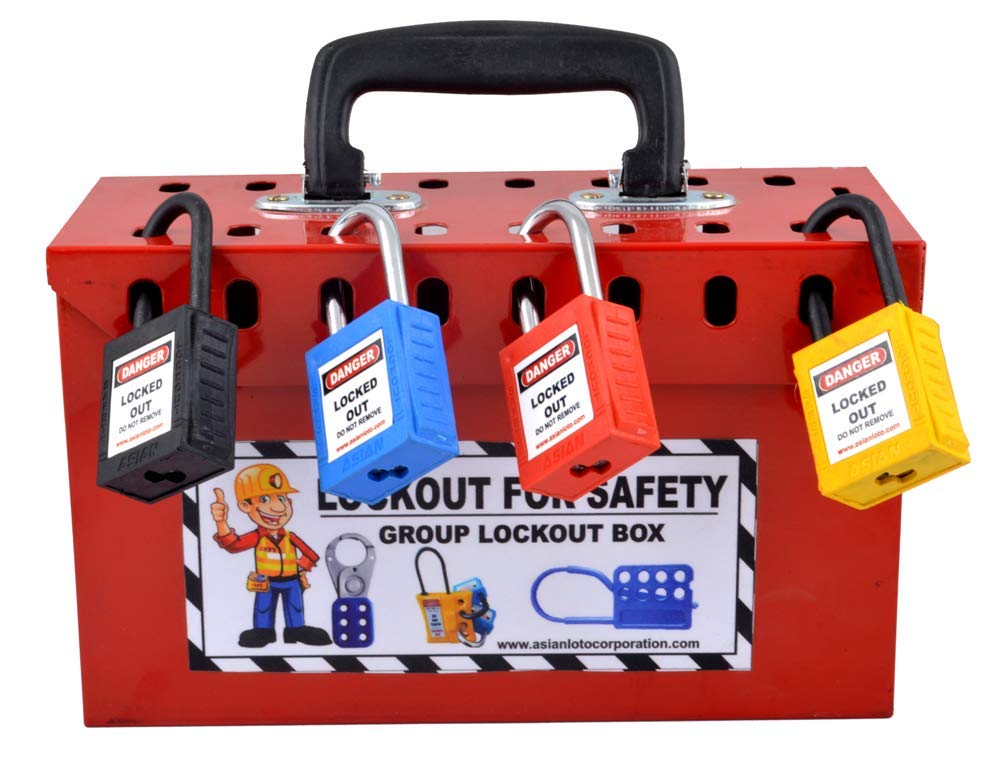
A lockout tagout (LOTO) lock box is a secure container designed to hold multiple lockout devices—such as padlocks, hasps, or valve locks—while machinery is being serviced. It’s used when multiple workers are involved in a single maintenance task, each applying their personal lock to the box. The box itself is placed over the main energy isolation point (like a circuit breaker or valve), but instead of locking that point directly, the actual lockout device keys are stored inside the box.
Each technician applies their individual padlock to the box. Only when the last worker finishes their task and removes their lock can the box be opened—and only then can the primary energy-isolating device be re-engaged.
Think of it like a relay race: no one can restart the machine until every participant has finished and signaled readiness.
How It Works: A Real-World Example
Imagine a chemical processing plant where a pump requires maintenance. Three technicians are involved:
- Mechanic A is replacing seals.
- Electrician B is inspecting motor windings.
- Instrument Tech C is recalibrating sensors.
The main power disconnect is locked out with a group lockout hasp, but the key to that lock is placed inside the LOTO lock box. Each technician places their personal padlock on the box. Even if Mechanic A finishes early, they can’t remove the main lock—because the key is still trapped. Only when all three have completed their work and removed their locks can the key be retrieved and the system re-energized.
This prevents premature restarts and ensures full team accountability.
Why You Need a Lockout Tagout Lock Box
The primary reason to use a lockout tagout lock box isn’t convenience—it’s human risk mitigation. Here’s where it makes the most difference:
1. Multi-Craft or Multi-Team Work
When different departments or contractors work on the same machine, coordinating safety becomes complex. A lock box centralizes control and eliminates guesswork.
2. Shift Changes During Maintenance If a job spans shifts, the outgoing team can lock their devices into the box. The incoming team adds their own locks. No handoff confusion. No assumptions.
3. Prevents Single-Point Failure Without a lock box, one worker might remove their lock and assume others are done. The box enforces a hard rule: all must agree before re-energizing.
4. Supports Compliance with OSHA 1910.147 The U.S. Department of Labor’s Control of Hazardous Energy standard requires that each authorized employee apply their own lock during servicing. A lockout box is one of the few tools that make group lockout both practical and compliant.
Common Mistakes That Undermine LOTO Lock Box Effectiveness
Even with a lock box in place, failures happen—not because of the device, but how it’s used.
Mistake #1: Using a Master Key System Some facilities keep a master key to the lock box “just in case.” This defeats the entire purpose. If someone can bypass individual locks, the system fails. OSHA explicitly prohibits override mechanisms unless under strict procedural control.
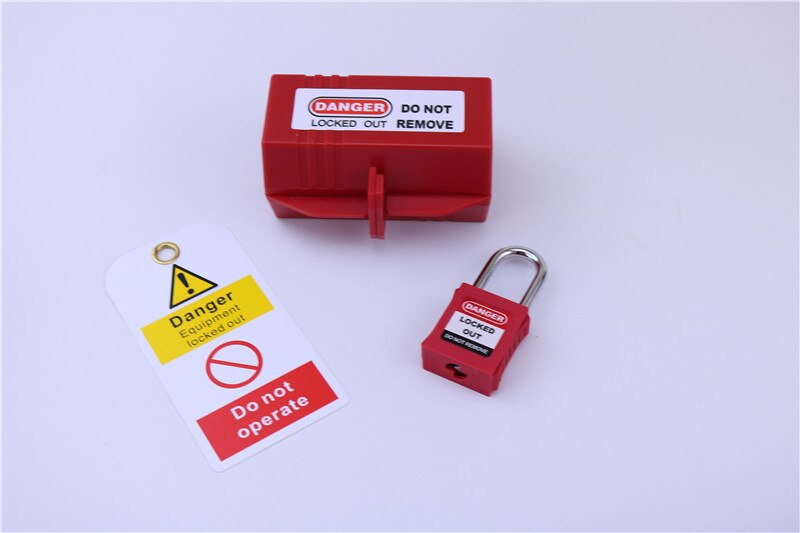
Mistake #2: Poor Labeling or No Instructions A lock box with no clear signage, procedure tags, or instructions causes confusion. Technicians may not know who’s working, what machine is affected, or how to proceed. Use standardized tagout tags with space for names, dates, and work descriptions.
Mistake #3: Overloading the Box Some lock boxes max out at 6 or 8 locks. When 10 people are on the job, makeshift solutions appear—like chaining extra locks outside the box. This creates uncontrolled access points. Always size the box for real-world team needs.
Mistake #4: No Integration with LOTO Procedures A lock box is a tool, not a system. It must be part of a documented LOTO procedure that includes energy source identification, shutdown steps, verification of isolation, and a clear process for lock application and removal.
Choosing the Right Lockout Tagout Lock Box
Not all lock boxes are equal. The best choice depends on your environment, team size, and operational complexity.
| Feature | Why It Matters |
|---|---|
| Lock Capacity | Choose based on typical team size. 6–12 locks is standard. |
| Material | Steel for durability, stainless steel for corrosive environments. |
| Weather Resistance | Outdoor or washdown areas need NEMA 4 or IP65-rated enclosures. |
| Visibility | Clear doors or windows let workers see if locks are still in place. |
| Mounting Options | Wall-mount vs. portable—depends on mobility needs. |
| Compatibility | Must accept standard padlocks, hasps, and cable locks. |
Top 5 Lockout Tagout Lock Boxes in Use Today
- Grace Industries 2000 Series Group Lockout Box
- - Holds up to 13 locks
- - Clear polycarbonate door for visibility
- - Corrosion-resistant steel construction
- - Ideal for manufacturing and utilities
- Saf-T-Lok SL-BOX-8
- - Fits 8 individual locks
- - Compact design for tight spaces
- - Includes bilingual (English/Spanish) warning labels
- - Common in food processing and HVAC
- Master Lock 12x8 Inch Steel Lockout Station
- - Heavy-duty steel with powder coat finish
- - Accommodates up to 12 workers
- - Often used as a central LOTO hub in warehouses
- BHS LOB-6 Multi-Worker Lockout Box
- - 6-lock capacity
- - Lightweight and portable
- - Used in mobile maintenance teams and field service
- Seton 6-Lock Hasp and Lockout Box Combo
- - Includes hasp for direct locking
- - Budget-friendly for small teams
- - Popular in light industrial and lab environments
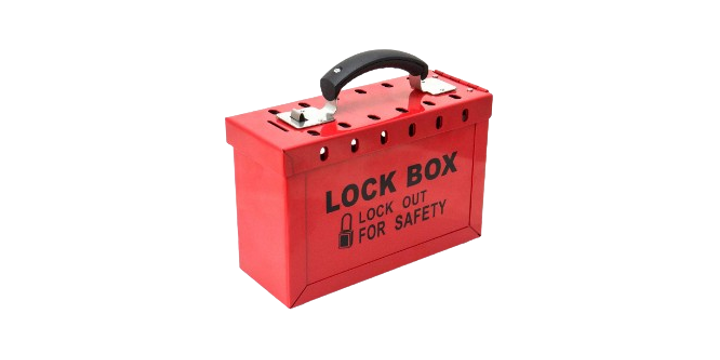
Each serves a niche. The key is matching the box to your workflow—not just buying the biggest or cheapest.
When to Use a Lockout Box vs. Direct Lockout
A common question: Why not just lock the energy source directly?
Direct lockout works for single-person tasks. But group work demands a different strategy.
| Scenario | Recommended Approach |
|---|---|
| One technician servicing a machine | Direct lockout (personal lock on disconnect) |
| Three or more workers on same system | Lockout box with key control |
| Maintenance spanning multiple shifts | Lockout box with shift交接 tags |
| Contractor and in-house team collaboration | Box with contractor-specific lock slots |
The rule of thumb: if more than one person needs to isolate energy, a lock box isn’t optional—it’s essential.
Integrating the Lock Box into Your LOTO Program
A standalone lock box does nothing. It must be embedded in a full LOTO program that includes:
- Energy Control Procedures: Documented steps for shutting down, isolating, blocking, and verifying zero energy.
- Employee Training: Authorized workers must know how to use the box, apply locks, and verify isolation.
- Periodic Inspections: OSHA requires annual audits of LOTO procedures. The lock box usage should be reviewed as part of this.
- Clear Roles: Designate a lead technician responsible for managing the box during complex jobs.
Workflow Tip: Use Color-Coded Locks Assign color-coded padlocks by role or department:
- Red: Maintenance
- Blue: Electrical
- Green: Operations
- Yellow: Contract Workers
This lets supervisors instantly see who’s involved and whether all teams have cleared the area.
Limitations and Mitigations
No tool is perfect. Here are the inherent limitations of lockout tagout lock boxes—and how to address them.
Limitation: Human Error Someone might forget to lock out or remove a lock prematurely.
Fix: Pair the box with a signed log sheet or digital check-in system. Use LOTO procedure boards nearby.
Limitation: Physical Access If the box is locked but the machine is left unguarded, others might tamper.
Fix: Combine with physical barriers or warning signs during maintenance.
Limitation: No Real-Time Monitoring Traditional boxes offer no alerts or tracking.
Fix: Consider smart lockout systems with RFID or Bluetooth locks that log entries and exits—though these come at a higher cost.
Final Thoughts: A Small Box With Massive Impact
The lockout tagout lock box may look simple—a metal case with a few padlocks hanging off it. But within that simplicity lies a powerful enforcement mechanism for workplace safety. It transforms individual responsibility into collective accountability.
But ownership isn’t compliance. A box gathering dust on a shelf is as dangerous as not having one. To work, it must be part of a living safety culture—where every lock applied is a promise, and every lock removed is a verified all-clear.
Equip your teams with the right box. Train them relentlessly. Audit consistently. And make lockout tagout not just a procedure, but a non-negotiable standard.
Start today: locate your current lockout boxes, review their use in the last three maintenance jobs, and verify they align with actual team workflows. Safety isn’t about having the right tools—it’s about using them right.
Frequently Asked Questions
What is the purpose of a lockout tagout lock box? It secures the keys to primary lockout devices, ensuring all workers complete their tasks before equipment can be re-energized.
Can multiple people use the same lock on a lockout box? No. Each worker must use their own personal lock. Shared locks violate OSHA’s one-person, one-lock rule.
Where should a lockout box be installed? Near the energy isolation point, in a visible, accessible location—preferably with signage and procedural instructions.
Do lockout boxes need to be inspected? Yes. Like all LOTO devices, they should be checked during annual safety audits for damage, usability, and compliance.
Can a lockout box be used for tagout only? Technically yes, but it reduces safety. Lockout (physical lock) is required whenever possible under OSHA 1910.147.
What happens if someone loses their lockout key? The lock must be removed by a supervisor using a documented “lock removal procedure,” proving the worker is safe and clear.
Are digital lockout boxes available? Yes. Some systems use electronic locks with PINs or RFID, but they must still meet OSHA’s requirements for individual control and accountability.
FAQ
What should you look for in Lockout Tagout Lock Box: The Key to Workplace Safety? Focus on relevance, practical value, and how well the solution matches real user intent.
Is Lockout Tagout Lock Box: The Key to Workplace Safety suitable for beginners? That depends on the workflow, but a clear step-by-step approach usually makes it easier to start.
How do you compare options around Lockout Tagout Lock Box: The Key to Workplace Safety? Compare features, trust signals, limitations, pricing, and ease of implementation.
What mistakes should you avoid? Avoid generic choices, weak validation, and decisions based only on marketing claims.
What is the next best step? Shortlist the most relevant options, validate them quickly, and refine from real-world results.