A machine shuts down for maintenance. A technician assumes it’s de-energized. Seconds later—impact. A preventable accident. The root cause? No documented lockout tagout (LOTO) log sheet.
Across manufacturing, utilities, and industrial facilities, the absence of a consistent, printable LOTO log sheet creates dangerous gaps in energy control procedures. OSHA estimates that proper lockout tagout practices prevent 120 fatalities and 50,000 injuries annually. Yet, compliance remains inconsistent—especially when documentation is disorganized or nonexistent.
A printable LOTO log sheet isn’t just paperwork. It’s a legal record, a communication tool, and a frontline defense against unexpected energization. This guide delivers ready-to-use templates, explains core components, and shows how to integrate logging into real-world safety workflows.
What Is a Lockout Tagout Log Sheet?
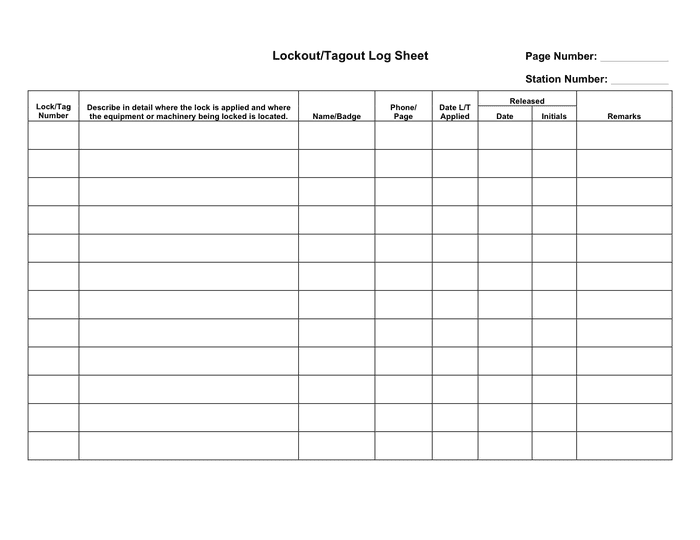
A lockout tagout log sheet is a standardized form used to document every phase of a machine’s de-energization and re-energization. It records who locked out equipment, when, why, and how many devices were used. Unlike standalone tags or locks, the log sheet provides a centralized history—making it invaluable during audits, shift changes, and incident investigations.
In practice, the log sheet ties together: - Authorized employee details - Equipment identification - Type of energy isolated (electrical, hydraulic, pneumatic, etc.) - Lock and tag counts - Start and end times - Verification steps
Most workplaces use printable versions because they’re accessible in control rooms, near equipment panels, or on clipboards—no internet or software needed. Despite the rise of digital tools, paper logs remain essential in high-risk, low-connectivity environments.
Key Elements of an Effective Printable LOTO Log Sheet
A cluttered or incomplete log sheet defeats its purpose. Use this checklist to ensure your printable version supports real safety outcomes:
1. Clear Header with Facility and Date Include plant name, department, and date range. This aids in record-keeping and OSHA inspections.
2. Equipment Identification List machine name, ID number, and location. Vague labels like “conveyor” lead to confusion. Be specific: “Conveyor #3 – Packaging Line South.”
3. Authorized Employee Section Capture the name, ID, and signature of each worker applying a lock. This establishes direct accountability.
4. Energy Source Details Checkboxes or fields for electrical, mechanical, hydraulic, pneumatic, chemical, and thermal sources. Helps verify all hazards are addressed.
5. Lock and Tag Inventory Track the number of locks and tags used. This cross-checks against physical devices during shift turnover.
6. Time Stamps for Lock and Release Log both lock application and removal times. Useful for analyzing downtime and verifying sequence adherence.
7. Supervisor or Verifier Signature Adds a layer of oversight. Critical for complex or multi-trade jobs.
8. Notes Field Space for special instructions, unexpected findings, or handover notes.
Common Mistakes That Undermine LOTO Logging
Even with a printable log sheet, errors creep in. These pitfalls compromise safety and compliance:
- Backdating entries: Recording times after the fact defeats the purpose of real-time verification.
- Using generic equipment names: “Pump” could mean five different units. Specificity saves lives.
- Skipping the verification step: A log sheet should confirm energy isolation was tested, not just assumed.
- Failure to retrieve all locks: The log must be reconciled before re-energization. Missing one lock means someone might still be inside the machine.
- Poor storage: Sheets left in filing cabinets after use are useless during emergencies. They should be posted near the equipment until the job is complete.
“We had a near-miss because a night-shift tech didn’t see the log sheet—it was in a binder in the office. Now it stays on the machine until every lock is off.” — Maintenance Supervisor, Automotive Plant
Real-World Use Cases: When the LOTO Log Sheet Prevents Disaster
Case 1: Shift Handover in a Chemical Plant A morning crew arrives to find a reactor isolated. The printable log sheet shows three locks applied by night technicians—two electricians and a process engineer. Without the log, the crew might assume the work is done and restart the system. Instead, they contact the engineers and confirm the lockout remains active.
Case 2: Multi-Contractor Job Site Three companies service a production line. Each applies locks. The central log sheet tracks all parties, preventing premature removal by one group unaware of others’ work. During audit, the log proves coordinated compliance.
Case 3: OSHA Inspection An inspector requests LOTO records for the past 90 days. The facility produces printed log sheets, signed and dated. The audit passes with no citations. Facilities without logs face fines averaging $13,653 per violation.
Printable LOTO Log Sheet Templates You Can Use Today
Below are three clean, functional templates. Print and customize them for your site.
Basic LOTO Log Sheet (Single-User)
| Field | Input Area |
|---|---|
| Facility | _____________________________ |
| Equipment ID & Name | _____________________________ |
| Date | _______________ |
| Authorized Employee | Name: ___________ Sig: _______ |
| Energy Sources Isolated | ☐ Electrical ☐ Hydraulic ☐ Pneumatic ☐ Chemical ☐ Mechanical |
| Number of Locks Applied | ______ |
| Lock Application Time | ______ |
| Verification Method | _____________________________ |
| Release Time | ______ |
| Supervisor Signature | _____________________________ |
Best for: Simple, single-person maintenance tasks.
Advanced LOTO Log (Multi-User)
| Step | Detail |
|---|---|
| Job Description | ________________________________________________________ |
| Location | ________________________________________________________ |
| Primary Technician | Name: ______________ ID: ______ Sig: ______ |
| Additional Personnel | (Use back or attach list) |
| Equipment Energy Sources | List and verify each: |
| • Electrical – Panel #____, Verified: ☐ | |
| • Pneumatic – Valve #____, Verified: ☐ | |
| Lock Application Log | Start Time: ______ / End Time: ______ |
| Lock Removal Log | All locks removed? ☐ Yes ☐ No / Final Release Time: ______ |
| Supervisor Approval | Signature: __________________ Date: ______ |
Best for: Complex jobs with multiple trades or extended durations.
LOTO Turnover Sheet (For Shift Changes)
Incoming Shift Acknowledgement I, ________________________, have reviewed the LOTO log for Equipment: ____________________. Current locks in place: ______. Personnel involved: ____________________. No work in progress. ☐ Yes ☐ No Signature: __________________ Date: ______ Time: ______
Outgoing Shift Notes Pending tasks: ___________________________________________ Hazard alerts: ___________________________________________
Use at shift change to prevent accidental re-energization.
Top 5 Free Sources for Printable LOTO Log Sheets
Don’t design from scratch. Leverage these trusted sources:
- OSHA.gov
- - Offers sample LOTO procedures and log formats
- - Fully compliant with 29 CFR 1910.147
- - Pros: Authoritative, free
- - Cons: Generic; requires customization

- National Safety Council (NSC) Resource Center
- - Downloadable PDFs with visual aids
- - Includes bilingual (English/Spanish) versions
- - Pros: User-friendly, educational
- - Cons: Membership gives full access
- EHS Daily Advisor (Safety+Health Magazine)
- - Industry-specific templates (manufacturing, utilities)
- - Editable Word formats for customization
- - Pros: Practical, real-world tested
- - Cons: Email registration required
- SafetySign.com
- - Free printable logs + matching tags and labels
- - Bundled with training materials
- - Pros: Visual consistency with signage
- - Cons: Promotional content mixed in
- Template.net (Safety Section)
- - 20+ LOTO log variations (PDF, Word, Excel)
- - Searchable by industry
- - Pros: Design variety
- - Cons: Some templates are overly complex
Always review downloaded sheets against your internal safety program. Remove irrelevant fields and add site-specific details.
How to Implement a LOTO Logging System That Sticks
Having a printable sheet isn’t enough. Integrate it into your workflow:
Step 1: Assign Responsibility Designate who fills out the log—usually the lead authorized employee. Rotate this role only with proper training.
Step 2: Standardize Placement Keep log sheets on clipboards near equipment or in lockout stations. Never store them off-site during active lockouts.
Step 3: Train on Completion Don’t assume people know how to use the form. Include log sheet practice in LOTO training—have employees simulate a full entry.
Step 4: Audit Monthly Review 5–10 log sheets per month for completeness. Flag missing signatures, vague equipment IDs, or unchecked energy sources.
Step 5: Digitize Backups Even if you use paper, scan completed sheets monthly. Store them digitally for 1–3 years (per OSHA recordkeeping rules).
Pro Tip: Use color-coded log sheets by department—red for maintenance, blue for production, green for contractors. Makes identification faster.
Final Thoughts: Turn Paper Into Protection
A lockout tagout log sheet printable is more than a form—it’s a living record of safety. When filled correctly, it bridges communication gaps, prevents human error, and proves compliance when it matters most.
Don’t wait for an incident or audit to get serious about logging. Download a template today, customize it for your equipment, and make it part of every lockout procedure. Train your team. Audit consistently. Turn simple paper into real protection.
Action Step: Print three copies of the basic template. Post one at your most active maintenance point. Test it on the next scheduled lockout. Refine from there.
FAQ What should be included in a LOTO log sheet? Name of authorized employee, equipment ID, energy sources isolated, number of locks/tags, time stamps, verification method, and supervisor signature.
Are printable LOTO logs OSHA-compliant? Yes, as long as they capture required information and are retained for at least one year.
Can multiple people use the same log sheet? Yes—especially in group lockout scenarios. The log must list every individual applying a lock.
Where should the log sheet be kept during maintenance? On or near the equipment being serviced, not in an office or filing cabinet.
How long should completed log sheets be stored? Minimum of one year; longer if they relate to an incident or ongoing repair.
Do I need a separate log for each machine? Yes—each energy-controlled task requires its own documented log.
Can I modify a free template? Absolutely. Customize it to match your equipment, workflow, and safety policies.
FAQ
What should you look for in Lockout Tagout Log Sheet Printable: Free Templates & Best Practices? Focus on relevance, practical value, and how well the solution matches real user intent.
Is Lockout Tagout Log Sheet Printable: Free Templates & Best Practices suitable for beginners? That depends on the workflow, but a clear step-by-step approach usually makes it easier to start.
How do you compare options around Lockout Tagout Log Sheet Printable: Free Templates & Best Practices? Compare features, trust signals, limitations, pricing, and ease of implementation.
What mistakes should you avoid? Avoid generic choices, weak validation, and decisions based only on marketing claims.
What is the next best step? Shortlist the most relevant options, validate them quickly, and refine from real-world results.