Workers servicing machinery face real danger when energy sources aren’t properly controlled. One missed valve, an unsecured circuit, or a forgotten hydraulic line can turn routine maintenance into a life-altering incident. That’s where a lock out tag out box comes in—it’s not just storage. It’s a critical hub for enforcing safety during equipment servicing.
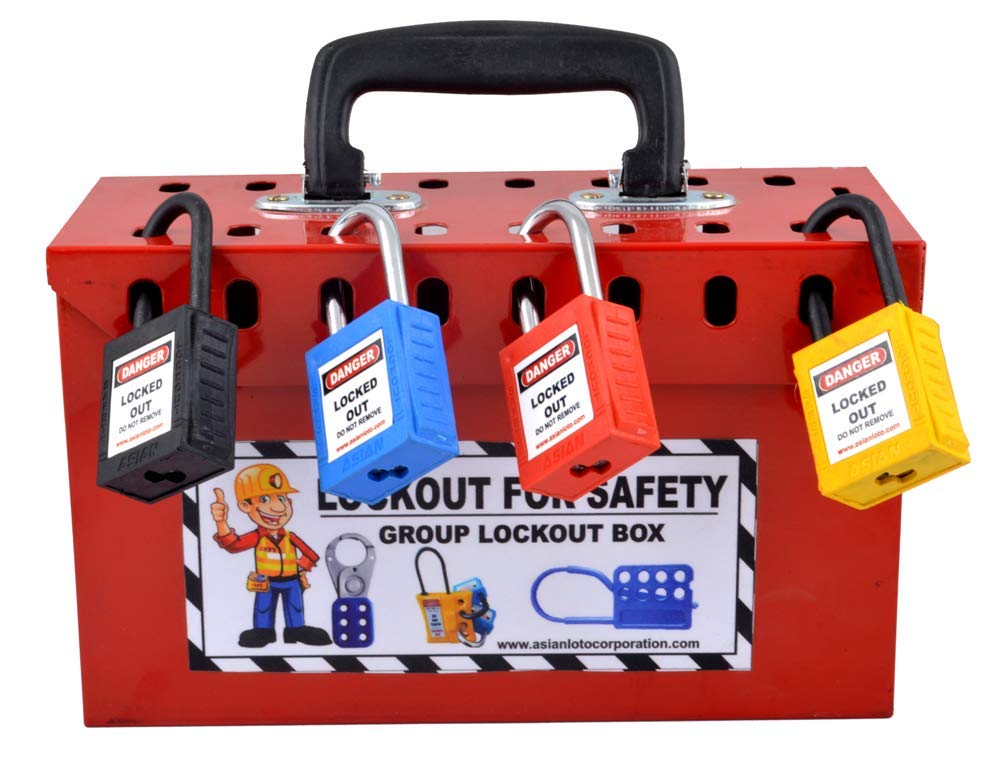
At its core, a lock out tag out box (often called a lockout station or group lockout box) is a centralized system that ensures multiple workers can simultaneously secure energy isolation points before maintenance begins. It’s especially vital in complex industrial environments where several technicians work on the same machine, each responsible for isolating a different energy source.
Ignoring proper lockout procedures isn’t just risky—it’s a violation of OSHA standards. Non-compliance can lead to severe penalties, but more importantly, it endangers lives. A well-implemented LOTO box system eliminates confusion, enforces accountability, and ensures no single individual can restart equipment prematurely.
How a Lock Out Tag Out Box Works in Practice
A typical lock out tag out box functions as part of a broader energy control program. Here’s how it integrates into real-world workflows:
When maintenance is scheduled, the authorized employee (often a supervisor or lead technician) begins by identifying all energy sources—electrical, pneumatic, hydraulic, chemical, thermal, or gravitational. Each energy-isolating device (like a circuit breaker or valve) must be physically locked in the “off” or “closed” position using a lockout device.
Here’s where the LOTO box becomes essential: it holds the keys to those locks.
Instead of handing keys to individuals, the keys are placed inside the lockout box. Each worker then applies their personal lock to the box. Only when every worker has locked the box—and thus, every energy source is secured—can the equipment be declared safe for service.
To restart, the reverse happens: all workers must remove their locks from the box before the key is retrieved and used to unlock each isolation point.
Example: In a paper mill, five technicians must service a pulping machine. One handles electrical, two manage hydraulic lines, and two secure steam valves. Each applies their lock to the LOTO box, which contains the master key for the main disconnect. Until all five confirm their tasks are complete and remove their locks, the machine cannot be re-energized.
This system enforces positive control—no one can bypass another worker’s safety protocol.
Key Components of an Effective LOTO Box System
A lock out tag out box isn’t just a metal container with a hasp. A high-functioning system includes several integrated components:
- Durable Enclosure: Weather-resistant and tamper-proof, often made from steel or heavy-duty plastic.
- Multiple Locking Points: Designed to accept several padlocks, usually 6 to 12, so each worker can secure their lock.
- Key Compartment: A secure internal slot or container that houses the key(s) to energy-isolating devices.
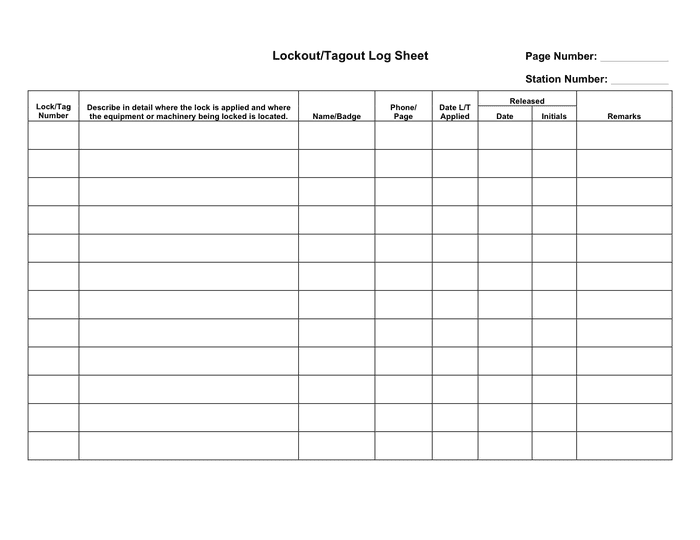
- Tag Out Slots or Panels: Space to attach warning tags that detail the work being performed, who initiated the lockout, and when.
- Clear Labeling: Bold warnings like “Do Not Operate” or “Equipment Under Maintenance” to deter unauthorized access.
Some advanced models include transparent lids for visibility, mounting brackets for wall installation, and even digital logging capabilities for audit trails.
Common Mistakes That Undermine LOTO Box Effectiveness
Even with a lock out tag out box in place, safety can fail due to human error or poor implementation. These mistakes are widespread but preventable:
- Using a Single Lock for Multiple Workers
- When several technicians use one lock or share a key, the entire purpose of individual accountability collapses. Each person must apply their own lock.
- Storing Keys Outside the Box
- If the key to a disconnect is left in a supervisor’s pocket or taped inside a panel, isolation is compromised. The key must be locked inside the LOTO box.
- Skipping the Tag Out Step
- Tags provide critical information: who locked the system, what work is being done, and emergency contacts. Without them, others might assume the equipment is safe.
- Poor Box Placement
- If the LOTO box isn’t near the equipment being serviced, workers may bypass it for convenience. Proximity increases compliance.
- Lack of Training
- Employees must understand not just how to use the box, but why. Training should cover energy types, isolation methods, and real-world scenarios.
These issues don’t just create risk—they open companies to OSHA citations. A 2023 inspection review found that improper lockout/tagout procedures were among the top 10 most cited violations, with fines averaging over $13,000 per incident.
When a LOTO Box Is Mandatory (and When It’s Not)
Not every maintenance task requires a group lockout box. OSHA’s standard (29 CFR 1910.147) mandates LOTO procedures when servicing or maintaining machines that could unexpectedly release stored energy.
A lock out tag out box becomes essential when:
- Multiple employees are working on the same equipment
- More than one energy source must be isolated
- Tasks extend beyond simple adjustments or minor servicing
- Equipment re-energizing could pose serious injury risk
For single-worker tasks with one energy source, a personal lockout device may suffice. But as complexity increases, so does the need for a centralized system.
Realistic use case: In an automotive assembly plant, a robotic arm requires calibration. Three technicians are involved—electrical, pneumatic, and control systems. A LOTO box ensures that no one can restore power or air supply until all three confirm completion.
Top 5 Lock Out Tag Out Boxes on the Market
Choosing the right LOTO box depends on your environment, team size, and regulatory needs. Here are five reliable options widely used in industry:
| Model | Lock Capacity | Material | Key Features |
|---|---|---|---|
| Brady BTL2P | 12 locks | Polycarbonate | Weatherproof, transparent lid, built-in tag holders |
| Grace Industries GI-600 | 6 locks | Steel | Wall-mountable, compact, ideal for tight spaces |
| Seton 74691 | 8 locks | Heavy-duty plastic | Affordable, includes blank tags and instruction labels |
| Master Lock 175DATRED | 10 locks | Steel | Red finish for high visibility, internal key tray |
| Safeland Supply LOTO-12 | 12 locks | Powder-coated steel | Tamper-resistant, includes mounting hardware |
Each serves different needs. The Brady model is ideal for outdoor or wet environments, while the Master Lock version offers durability in high-traffic facilities. For budget-conscious teams, Seton’s kit provides a complete starter package.
Integrating LOTO Boxes into Your Safety Program
A lock out tag out box is only as strong as the procedures behind it. To maximize effectiveness:

- Develop Clear LOTO Procedures: Document steps for each machine, including energy sources, isolation methods, and verification processes.
- Conduct Regular Audits: OSHA requires annual inspections. Use them to identify gaps and reinforce training.
- Use Visual Aids: Post LOTO flowcharts near high-risk equipment to guide workers.
- Standardize Equipment: Use consistent lock colors, tag formats, and box models across facilities.
- Empower Workers: Encourage stop-work authority—any employee should feel safe halting operations if LOTO protocols aren’t followed.
One manufacturing plant reduced lockout-related near-misses by 72% within a year simply by installing LOTO boxes at each production line and mandating tag completion. The change wasn’t in technology—it was in culture.
Why Compliance Isn’t Enough—Safety Is Cultural
Meeting OSHA standards is the baseline. But true safety comes from a culture where every worker views the lock out tag out box not as a compliance checkbox, but as a personal safeguard.
When a technician applies their lock, they’re not just following procedure—they’re making a physical statement: I am not safe yet. Do not start this machine.
That shift—from compliance to ownership—is what prevents accidents. It turns a metal box into a symbol of collective responsibility.
In one chemical processing facility, a new employee noticed a missing lock on a LOTO box during a routine check. He alerted the team, preventing a potential startup during valve maintenance. His vigilance, supported by a visible and respected LOTO system, avoided a likely catastrophic release.
Invest in Clarity, Not Just Compliance
A lock out tag out box is more than equipment—it’s a failsafe built on discipline, clarity, and mutual accountability. In high-risk environments, it’s the difference between a routine repair and a preventable tragedy.
Choose the right box for your operation, train your team thoroughly, and treat every lock applied as a non-negotiable boundary. Safety isn’t just policy. It’s a practice, reinforced every time a worker places their lock on the box.
Start today: audit your current LOTO procedures, verify that group lockout boxes are in place where needed, and ensure every technician knows not just how to use one—but why it matters.
Frequently Asked Questions
What is the purpose of a lock out tag out box? It ensures that all workers have secured energy sources before maintenance begins by holding the keys to isolation devices, which are only released when all personal locks are removed.
Can one person use a LOTO box? While possible, it’s primarily designed for group lockout scenarios. Single-person lockout typically uses personal locks and tags directly on isolation points.
Where should a lockout box be installed? Near the equipment being serviced, in a visible and accessible location, but protected from weather or damage if outdoors.
Do OSHA regulations require a lockout box? OSHA requires control of hazardous energy during maintenance. A LOTO box is a recommended and widely accepted method for group lockout compliance.
Can you use a padlock that isn’t part of a LOTO program? No. Only safety-specific padlocks, assigned to individual workers and marked with their name, should be used in LOTO procedures.
What happens if someone loses their lock key? The lock must be removed by a supervisor using a documented bypass procedure, often involving lock destruction and incident reporting.
Are digital LOTO boxes available? Yes—some systems use electronic locks and access logs, though they must still comply with OSHA’s physical control requirements.
FAQ
What should you look for in What Is a Lock Out Tag Out Box and Why You Need One? Focus on relevance, practical value, and how well the solution matches real user intent.
Is What Is a Lock Out Tag Out Box and Why You Need One suitable for beginners? That depends on the workflow, but a clear step-by-step approach usually makes it easier to start.
How do you compare options around What Is a Lock Out Tag Out Box and Why You Need One? Compare features, trust signals, limitations, pricing, and ease of implementation.
What mistakes should you avoid? Avoid generic choices, weak validation, and decisions based only on marketing claims.
What is the next best step? Shortlist the most relevant options, validate them quickly, and refine from real-world results.