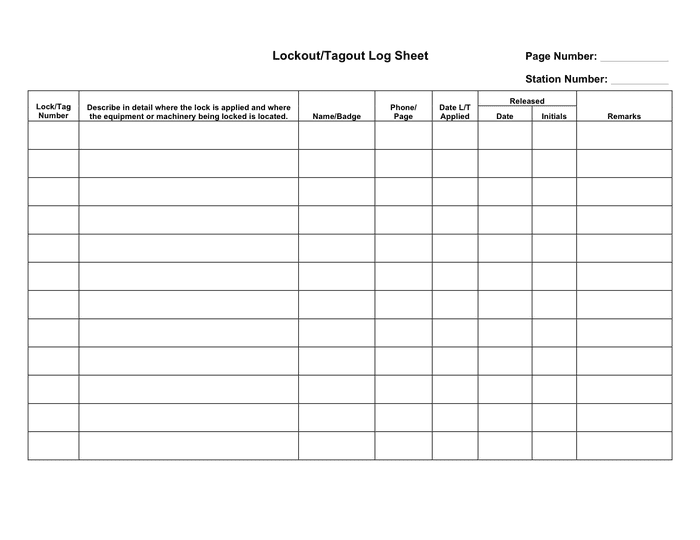
Accidents during equipment maintenance often stem from one preventable cause: failure to properly isolate energy sources. That’s where printable lockout tagout forms come in—simple, standardized documents that enforce accountability, document procedures, and keep workers safe. These forms are not just paperwork; they’re a critical component of any energy control program, bridging the gap between policy and practice.
Whether you’re managing a manufacturing floor, overseeing maintenance in a warehouse, or supervising facility operations, having accessible, professional-grade lockout tagout (LOTO) forms is non-negotiable. This guide breaks down what makes an effective printable LOTO form, how to use it correctly, and where to find trustworthy templates that meet regulatory standards.
Why Printable Lockout Tagout Forms Matter
Lockout tagout procedures exist to protect workers from unexpected energization or startup of machinery during servicing. According to OSHA, nearly 10% of workplace fatalities in manufacturing are related to uncontrolled hazardous energy. A well-designed, printable LOTO form turns a high-risk process into a controlled, documented workflow.
Printable forms provide consistency. Instead of relying on memory or verbal instructions, technicians follow a standardized checklist that includes:
- Equipment identification
- Type of energy source (electrical, hydraulic, pneumatic, etc.)
- Lock and tag placement points
- Authorized employee signatures
- Time-stamped start and end of lockout
Without this structure, workers may skip steps, miscommunicate, or fail to verify isolation—each a potential path to injury.
Key Elements of an Effective Printable LOTO Form
Not all lockout tagout forms are created equal. A high-quality, printable version should include specific components to ensure clarity, compliance, and safety.
#### 1. Equipment Information Section Every form must begin with clear identification of the machine or system being serviced. Include fields for: - Equipment name and ID number - Location (e.g., production line, floor, zone) - Department or responsible team
This prevents confusion, especially in facilities with multiple units of the same machine type.
#### 2. Energy Source Identification Machines often have more than one energy source. The form should list all applicable types: - Electrical - Mechanical - Hydraulic - Pneumatic - Chemical - Thermal
Workers must confirm each source is isolated, not just the primary one.
#### 3. Step-by-Step Isolation Procedure A blank space isn’t enough. The best printable forms include a pre-filled or fill-in-the-blank procedure that outlines: - How to shut down the machine - Where to apply locks and tags - How to verify zero energy (e.g., test switches, bleed lines)
This standardization reduces human error.
#### 4. Lock and Tag Details Each lock used should be documented: - Lock ID number - Employee name and role - Department - Time applied
Tags must include a warning message like “Do Not Operate – Work in Progress” and the reason for lockout.
#### 5. Verification and Sign-Off Before work begins, a second authorized employee should verify isolation. The form should include: - Verification signature - Test method used (e.g., attempt to start, voltage test) - Date and time
This dual-check system is a cornerstone of effective LOTO programs.
#### 6. Clear Re-Energization Protocol The form shouldn’t end with the repair. It must outline safe re-energization steps: - Confirm all tools removed - Ensure personnel are clear - Unlock in reverse order - Final sign-off
Including this prevents premature restarts.
Common Mistakes
with Printable LOTO Forms
Even with the right template, poor execution undermines safety. These are the most frequent pitfalls:
Using Generic Templates Without Customization A form downloaded off the internet may not match your equipment. Always adapt it to reflect actual isolation points, energy types, and shutdown procedures.
Incomplete Documentation Leaving fields blank—especially verification and re-energization sections—creates compliance gaps. Treat every line as mandatory.
Failing to Train on Form Usage A form is only as good as the people using it. Employees must be trained not just on LOTO procedures, but on how to correctly fill out the form.
Storing Forms Digitally Only If the printer is down or the form is inaccessible during an emergency shutdown, safety fails. Always keep physical copies near equipment or in maintenance kits.
Reusing Forms Without Review Each lockout event is unique. Never recycle a completed form. Always use a fresh copy.
Real-World Use Cases
Case 1: Conveyor System Maintenance A technician needs to replace a drive belt on a packaging line. Using a printable LOTO form, they: - Identify the conveyor by ID number - List electrical and mechanical energy sources - Apply a personal lock at the disconnect switch - Verify zero energy by attempting to restart - Sign and date the form
The supervisor verifies and signs before work begins. After repair, the form guides safe re-energization.
Case 2: Hydraulic Press Repair During a die change, a press must be locked out. The form ensures the technician: - Closes hydraulic valves and relieves line pressure - Tags the main power and hydraulic pump - Confirms pressure gauges read zero - Documents all locks used
Without the form, residual pressure could cause sudden movement—an avoidable hazard.
Where to Find Reliable Printable LOTO Forms
Not all templates are OSHA-compliant or practically useful. These sources offer high-quality, customizable printable lockout tagout forms:
#### 1. OSHA Official Resources OSHA provides free LOTO guidelines and sample forms through their website. While not plug-and-play, they’re authoritative and compliant. Best for organizations building custom programs.
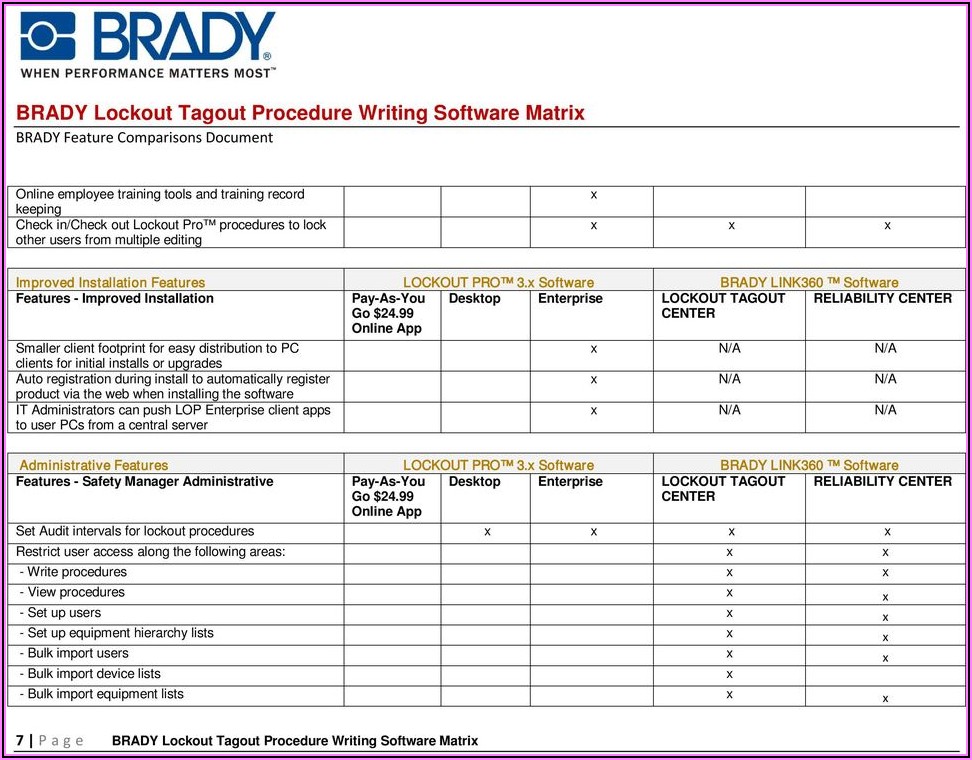
#### 2. Industry Safety Suppliers (e.g., Grainger, Brady) Companies like Brady offer printable PDFs alongside their lockout hardware. These are professionally designed, often multilingual, and include visual aids. Some require account registration.
#### 3. Free Safety Template Libraries Websites like SafetyCulture (iAuditor) and Creative Safety Supply offer downloadable, editable LOTO forms. Many are available in Word or PDF format and can be branded with company logos.
#### 4. Internal EHS Software Platforms Tools like EHS Insight or Intelex include printable LOTO form generators. These integrate with digital workflows but allow PDF export for offline use.
#### 5. Custom In-House Development For complex operations, the best solution is creating company-specific forms. Use a template as a starting point, then tailor it with engineering input. Store finalized versions on shared drives and near equipment stations.
How to Optimize Your Printable LOTO Workflow

Having the form is only half the battle. Implementation determines effectiveness.
Print in Bulk and Distribute Strategically Keep stacks near high-risk machines, in maintenance offices, and in technician toolkits. Use weather-resistant paper in harsh environments.
Use Carbon Copies or Duplicate Forms For accountability, use two-part forms: one stays with the equipment, the other goes to supervision. This creates a paper trail.
Conduct Monthly Audits Review completed forms for completeness and accuracy. Look for missing signatures, vague entries, or skipped verification steps.
Pair Forms with Visual Aids Post laminated LOTO flowcharts next to equipment. These reinforce the form’s steps and reduce hesitation during emergencies.
Train New Hires Using the Form Make form completion part of onboarding. Have trainees walk through a mock lockout using the actual printable version.
Limitations of Printable Forms (And How to Address Them)
Printable LOTO forms are essential but not foolproof.
No Real-Time Tracking Unlike digital systems, paper forms don’t alert others when a machine is locked out. Mitigate this by maintaining a central log or whiteboard in shared areas.
Risk of Loss or Damage Forms can be misplaced or damaged. Use clipboards with covers or store completed forms in labeled binders for recordkeeping.
Limited Accessibility in Remote Areas If a machine is in a hard-to-reach location, carrying a form may be overlooked. Pre-stage forms in maintenance kits or use waterproof, tear-resistant versions.
No Automated Reminders Paper doesn’t alert when a lockout exceeds a safe duration. Supervisors should conduct routine checks during long outages.
For high-risk or complex environments, consider supplementing printable forms with digital tools—while keeping paper as the fallback.
Final Thoughts: Simplicity Saves Lives
A printable lockout tagout form is more than a compliance document. It’s a lifeline. In high-pressure maintenance scenarios, it provides structure, clarity, and legal protection. The best forms are clear, comprehensive, and easy to use—designed not for auditors, but for the technician with grease on their hands.
Start by auditing your current process. Are your forms complete? Are they used consistently? Customize a template today, print it, and put it into action. One well-filled form could prevent a life-altering injury.
FAQ
What should a lockout tagout form include? It should list equipment details, energy sources, isolation steps, lock/tag information, verification signatures, and re-energization procedures.
Are printable LOTO forms OSHA compliant? Yes, if they meet OSHA 29 CFR 1910.147 requirements for documentation, verification, and employee authorization.
Can I use the same form for different machines? Only if the machines are identical in design and energy sources. Otherwise, customize the form for each equipment type.
Who can fill out a LOTO form? Only authorized employees trained in energy control procedures should complete and sign the form.
How long should completed forms be kept? OSHA doesn’t specify, but best practice is to retain them for at least one year for audit and incident review purposes.
Should LOTO forms be stored digitally or physically? Both. Keep a physical copy with the equipment during lockout and a digital or filed copy for records.
Can a printable form replace a full LOTO procedure? No. The form supports the procedure but doesn’t replace training, equipment-specific protocols, or policy documentation.
FAQ
What should you look for in Printable Lockout Tagout Forms: Essential Safety Tools? Focus on relevance, practical value, and how well the solution matches real user intent.
Is Printable Lockout Tagout Forms: Essential Safety Tools suitable for beginners? That depends on the workflow, but a clear step-by-step approach usually makes it easier to start.
How do you compare options around Printable Lockout Tagout Forms: Essential Safety Tools? Compare features, trust signals, limitations, pricing, and ease of implementation.
What mistakes should you avoid? Avoid generic choices, weak validation, and decisions based only on marketing claims.
What is the next best step? Shortlist the most relevant options, validate them quickly, and refine from real-world results.